

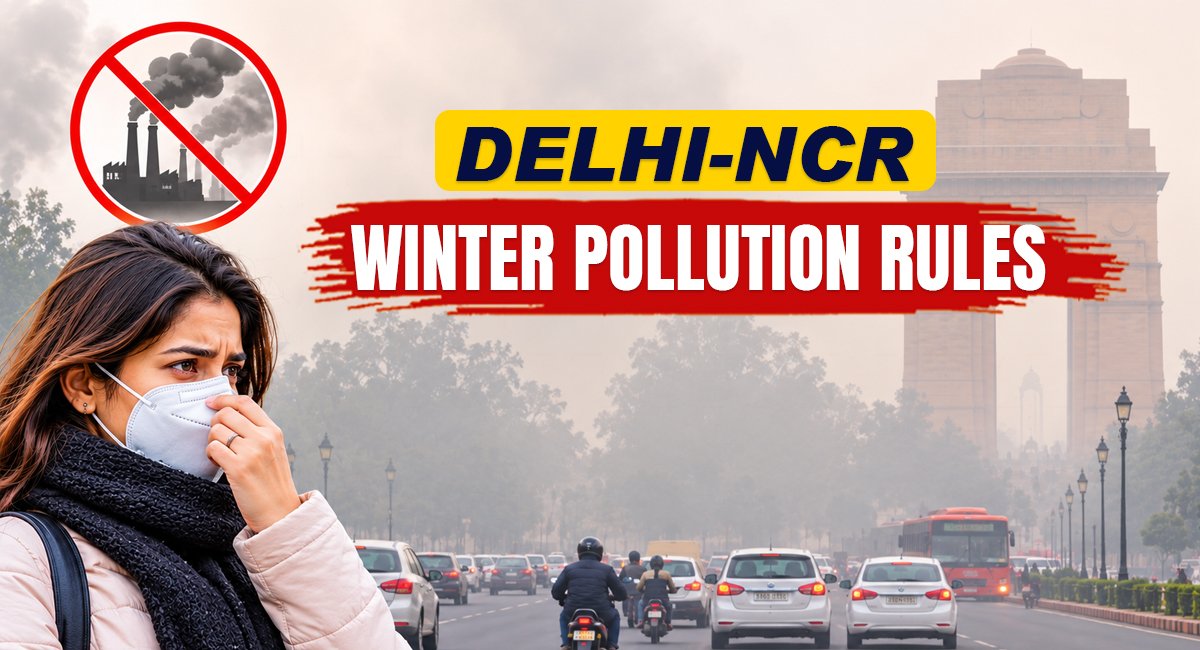
Air pollution becomes a major problem in Delhi-NCR every
winter. Cold weather, slow wind speed and increasing vehicle emissions can make
pollution levels very high. To control this problem, the Delhi Government has
started its Winter Pollution Action Plan 2026-27.
This plan started on 1 November 2026 and will continue until
28 February 2027. Under this plan, new rules have been introduced for vehicles,
construction work, office attendance, parking charges and PUC certificates. You
can read the official
government update on Delhi's winter pollution measures.
The main aim of these rules is to reduce the use of private
vehicles, control dust pollution and reduce traffic on roads. If you live in
Delhi or any NCR area and travel to Delhi regularly, you should know about
these five important rules.
1. Non-BS6 Vehicles Will Not Be Allowed to Enter Delhi
Under the winter pollution rules, petrol and diesel vehicles
registered outside Delhi that do not meet BS-VI emission standards will not be
allowed to enter Delhi from 1 November 2026.
This rule may affect vehicle owners travelling to Delhi from
NCR areas like Noida, Ghaziabad, Gurugram and Faridabad.
BS-VI vehicles, along with CNG and electric vehicles, are
exempt from this restriction. Emergency vehicles like ambulances and fire
engines will also be allowed under the applicable exemptions.
This restriction will remain in place until 31 January 2027.
So, it is better to check your car or bike's emission standard before
travelling to Delhi. Read more about the non-BS6
vehicle entry restrictions.
2. Restrictions on Construction and Demolition Work
To reduce dust pollution in Delhi, strict rules have also
been introduced for construction and demolition activities.
From 1 November 2026 to 31 January 2027, demolition work and
outdoor construction activities that create dust will be banned. Some important
public infrastructure projects may get permission under special conditions.
Indoor work such as plumbing, electrical fitting and
finishing work may be allowed, but workers will have to follow dust-control
rules.
The government has also decided to make pollution-control
rules stricter at construction sites. The aim is to control dust from construction
work, as it can make air quality worse during winter. The Press
Information Bureau's official update also covers these construction and
demolition restrictions.
3. 50% Work From Home in Government and Private Offices
Office employees may also see some changes this winter. To
reduce pollution and traffic, government and private offices have been asked to
allow 50% of their staff to work from home.
This means only 50% of employees will be present in the
office at one time, while the remaining employees will work from home.
According to reports, employees may also get two work-from-home days every
week.
Essential services will be exempt from this rule.
The Delhi Government has also changed office timings.
Municipal Corporation of Delhi (MCD) offices will work from 8:30 AM to 5:00 PM.
Delhi Government offices will work from 10:00 AM to 6:30 PM.
This step may help reduce the number of vehicles on roads
during office hours and manage traffic better. You can check the full
details of the work-from-home arrangement and revised office timings.
4. Public Parking Charges Will Double
To discourage the use of private vehicles, parking charges
at authorised public parking areas in Delhi have been doubled.
This rule will remain in place from 1 November 2026 to 28
February 2027. The main aim is to encourage people to use public transport
instead of private cars.
However, parking facilities operated by the Delhi Metro Rail
Corporation (DMRC) are exempt from this increase.
If you regularly use your car to travel to the office or
market, the extra parking cost may affect your monthly travel budget. In such
cases, options like the Delhi Metro and public buses can be useful.
5. No PUC, No Fuel Rule
Delhi has also started strictly following the No PUC, No
Fuel policy from 1 November.
According to this rule, vehicles without a valid Pollution
Under Control (PUC) certificate will not get petrol, diesel or CNG at fuel
stations.
To enforce this rule, Automatic Number Plate Recognition
(ANPR) cameras have been installed at around 500 fuel stations in Delhi. These
cameras will scan vehicle number plates and help check their PUC status.
Vehicle owners must keep their PUC certificates valid. If your
certificate has expired, get it renewed before visiting a fuel station. The PIB's
official announcement on the No PUCC, No Fuel campaign provides further
information about ANPR-enabled fuel stations.
How Will These Pollution Rules Be Enforced?
The Delhi Government will use special enforcement teams,
ANPR cameras and an AI-enabled Integrated Command and Control Centre (ICCC) to
implement these rules.
Vehicles that break the rules may receive e-challans.
Authorities will also carry out checks at border areas to stop restricted
vehicles from entering Delhi. The official
PIB update on pollution enforcement measures provides additional details.
Why Are These Rules Important for Delhi-NCR?
Air quality in Delhi-NCR often becomes very poor during
winter. Vehicle emissions, construction dust, industrial pollution and other
sources all add to the problem.
That is why the government has included offices, parking
areas and construction activities in its pollution control plan, instead of
focusing only on vehicles.
These rules can show real results only when government
agencies and local residents work together to control pollution. Using public
transport, keeping a valid PUC certificate and avoiding unnecessary vehicle
trips are some useful steps everyone can take.
Residents of Delhi-NCR should check the latest traffic
updates and government notifications before travelling. This will help them
avoid problems due to any new restrictions.


Discussion & Comments (0)
No comments yet. Be the first to share your thoughts on this story!
Leave a Comment