

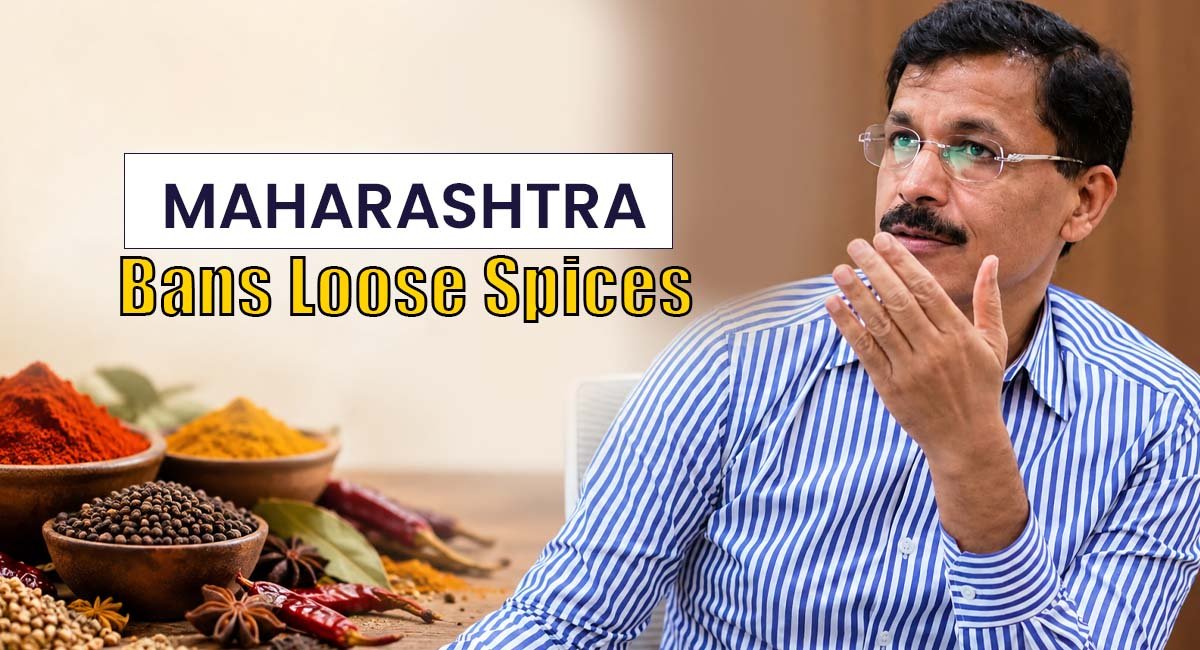
Buying loose spices from a local grocery shop may no longer be an option in Maharashtra. The state's Food and Drug Administration (FDA) has banned the sale of loose and unpacked spice powders and mixed spices to prevent adulteration and contamination.
The order was issued on October 15, 2026, by Maharashtra FDA
Commissioner Tukaram Mundhe. Under the new rules, spices must be properly
packed and sealed at the production site so their source can be traced easily.
The decision is part of a wider effort to improve food
safety across Maharashtra. It has also brought attention to Mundhe's work,
which recently received public support from Bollywood actress Preity Zinta.
Tukaram Mundhe Issues New Rules for Spice Sellers
Tukaram Mundhe, who heads Maharashtra's Food and Drug
Administration, has introduced stricter requirements for businesses involved in
the spice trade.
The new order covers the production, processing, storage,
transportation and sale of spices. Manufacturers, wholesalers, retailers,
online sellers, restaurants and other food businesses must follow the
applicable food safety rules.
The main goal is to make it easier to identify where spices
come from and take action if adulterated or unsafe products are found in the
market.
The FDA has also directed businesses to follow proper
hygiene, packaging and labelling standards. Officials will examine the supply
chain instead of focusing only on shops selling the final products.
Which Spices Are Covered Under the Ban?
The new rules cover several everyday spices used in Indian
kitchens.
These include:
- Turmeric
powder
- Red
chilli powder
- Coriander
powder
- Cumin
and black pepper
- Cinnamon,
cloves and cardamom
- Garam
masala and curry powder
- Other
spice powders and mixed spices covered by the order
Under the new requirements, these products must be packed
and sealed at the production site rather than sold loose and unpacked.
Why Has Maharashtra Taken This Step?
Spice adulteration is a serious food safety concern. Some
products may contain unauthorised colours, unwanted substances or lower quality
ingredients that can affect their safety and quality.
The new rules aim to reduce these risks through better
monitoring and stricter checks.
Proper packaging and labelling can also help officials trace
a product back to its manufacturer or supplier when a complaint is received.
The order also prohibits the use of ethylene oxide for spice
sterilisation and tightens action against prohibited colours and other
adulterants.
Businesses that fail to follow the rules may face legal
action under applicable food safety laws.
Preity Zinta Shows Support for Tukaram Mundhe
Tukaram Mundhe's food safety campaign has also received
attention from Bollywood celebrities.
Actress Preity Zinta was recently spotted wearing a black
T-shirt with the words “Team Tukaram Mundhe” during an outing in Mumbai.
Her gesture was seen as support for the Maharashtra FDA commissioner's efforts
against food adulteration and poor hygiene standards.
Preity's support came in September 2026, before the new
spice order was issued in October.
She also expressed her appreciation for public servants
working to improve food safety. Her gesture brought more public attention to
the issue and to the need for safer food practices.
Mundhe has welcomed support from celebrities but has also
stressed that public awareness alone is not enough. Businesses and citizens
must take responsibility and work together to make food safer.
What Does the New Rule Mean for Consumers?
For consumers, the biggest change is that loose and unpacked
spice powders covered by the order will no longer be available for sale in
their previous form.
People will need to buy properly packed and sealed spices.
Before purchasing a product, they should check the label for the manufacturer's
details, batch number, food licence information and other required details.
Packaged products are not automatically free from every
risk, but proper labelling makes it easier to identify the source and report
concerns.
Consumers should also avoid products with damaged packaging
or unclear labels.
What Happens Next?
The success of the new rules will depend on how well
businesses follow them and how strictly the FDA monitors the market.
Officials will need to check manufacturers, suppliers,
retailers and other businesses involved in the spice trade. Small shopkeepers
may also need to change how they purchase, store and sell their products.
The move is expected to bring greater attention to food
quality and traceability across Maharashtra.
Conclusion
Maharashtra's ban on the sale of loose and unpacked spice
powders is an important development in the state's food safety campaign. FDA
Commissioner Tukaram Mundhe has introduced stricter rules to help prevent
adulteration and make spices easier to trace.
Preity Zinta's public support for Mundhe's wider food safety
drive has also helped bring attention to the issue.
The real test will be how effectively the new rules are
enforced. For consumers, the message is simple: check product labels, choose
properly sealed spices and report suspected adulteration.



Discussion & Comments (0)
No comments yet. Be the first to share your thoughts on this story!
Leave a Comment