

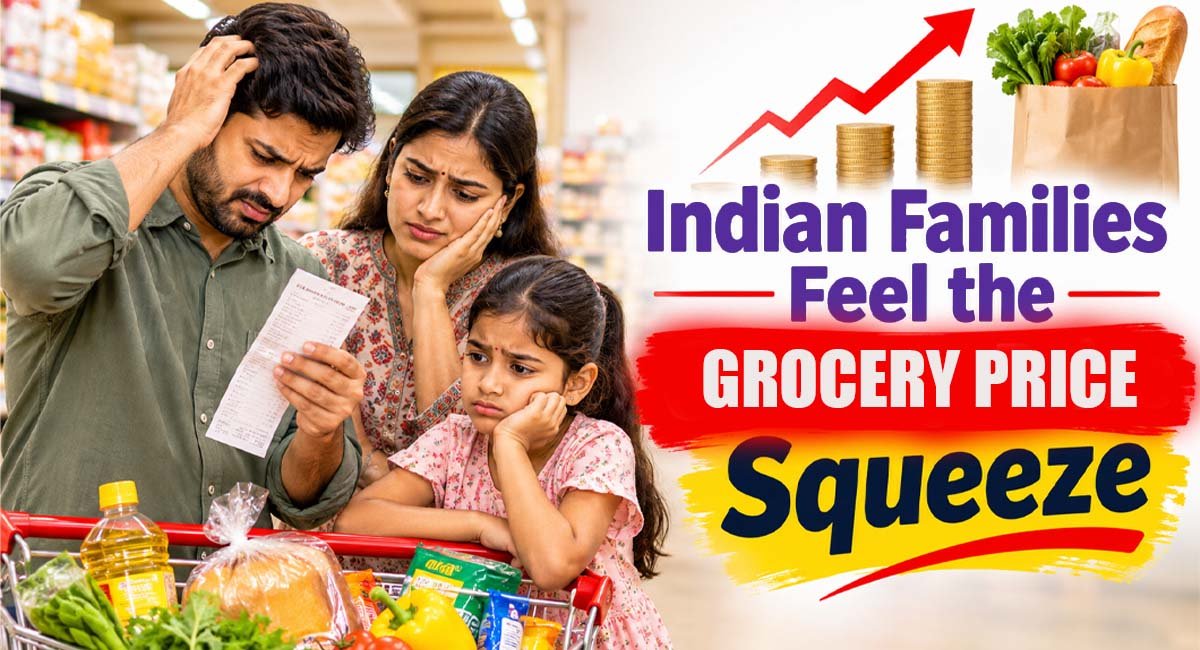
Managing monthly household expenses is becoming increasingly challenging for many Indian families. From cooking oil and vegetables to milk, cereals and pulses, the cost of everyday essentials is putting pressure on grocery budgets. A recent LocalCircles survey has found that 61% of consumers are spending more than 20% extra every month on household essentials compared to 12 months ago.
The survey received over 1.34 lakh responses from household
consumers across 326 districts in India. Its findings also show that rising
expenses are changing how families shop, save money and manage their daily food
requirements. Many consumers are cutting back on entertainment and shopping,
while some are purchasing smaller quantities of essential products.
Ghee, Cooking Oil and Vegetables Among the Costliest
Essentials
The rising cost of kitchen essentials is one of the major
concerns highlighted by the survey. Consumers reported noticeable price
increases across several food categories over the past year.
Among the 21,637 respondents who answered the question about
rising prices, 75% identified ghee, butter and edible oils as products that had
become significantly more expensive. Fresh vegetables followed at 73%, while
71% reported higher prices for rice, wheat and other cereals.
Other categories also recorded considerable responses:
- 65%
reported higher prices of milk and dairy products.
- 65%
noticed an increase in fresh fruit prices.
- 62%
reported higher prices of pulses and dals.
- 40%
identified eggs, meat and poultry as more expensive.
- 33%
reported higher cooking gas prices.
These findings suggest that the pressure is not limited to
one particular grocery category. When the prices of cooking oil, vegetables,
cereals, dairy products and pulses rise together, families have fewer options
to manage their monthly food expenses.
61% of Consumers Report More Than 20% Higher Monthly
Spending
One of the most significant findings of the LocalCircles
survey concerns the increase in monthly household expenditure.
The survey asked 74,311 consumers how much more they were
spending on household essentials compared to 12 months earlier. The responses
showed that a large majority were experiencing higher monthly expenses.
The reported increases were:
- 61%:
Spending more than 20% extra.
- 18%:
Spending 15–20% more.
- 13%:
Spending 10–15% more.
- 2%:
Spending 5–10% more.
- 4%:
Spending up to 5% more.
This indicates that rising essential expenses are affecting
household budgets at different levels. For many families, the additional
grocery expenditure means having less money available for savings, personal
purchases and unexpected financial needs.
However, these percentages reflect respondents' reported
changes in household spending. They should not be treated as the official
inflation rate because monthly expenditure also depends on the quantity and
type of products purchased.
Families Are Cutting Back on Shopping and Entertainment
Higher grocery expenses are also changing the spending
priorities of Indian households.
According to the survey, 74% of respondents are reducing
discretionary expenses such as eating out, shopping and entertainment. Around
50% are purchasing smaller quantities of essential products to manage their
monthly budgets.
Another 37% are switching to cheaper brands or lower-priced
alternatives. Meanwhile, 39% reported using their savings or borrowing money to
handle household expenses.
These findings show how families are adjusting their
spending habits to manage increasing costs. While reducing restaurant visits or
delaying shopping purchases may help temporarily, relying on savings or
borrowing can create additional financial pressure over time.
Rising Grocery Costs Are Affecting Food Choices
One of the more concerning findings is that some families
are also changing their food consumption habits.
The survey found that 39% of consumers had reduced their
consumption of milk, dairy products or other nutritious foods. Another 39%
reported buying fewer fruits and vegetables.
This suggests that increasing household expenses are
affecting more than shopping preferences. For some consumers, affordability is
becoming an important factor when deciding what food products to purchase and
how much to consume.
The survey does not establish whether these changes have
caused nutritional problems, but the findings highlight a potential concern for
household food choices if essential prices remain high.
October Inflation Data Adds to Household Concerns
The survey findings come amid rising inflationary pressure
in India.
According to the Ministry of Statistics and Programme
Implementation (MoSPI), India's retail inflation increased to 6.09% in October
2026. Food inflation, measured through the Consumer Food Price Index, reached
8.94% during the same month.
Both figures were higher than their September levels, when
retail inflation stood at 5.54% and food inflation was 7.74%. These figures are
available in the government's official
October 2026 Consumer Price Index report.
The official inflation figures and the LocalCircles survey
measure different things. While the Consumer Price Index tracks changes in
prices across a defined basket of goods and services, the survey records how
consumers say their household spending has changed.
The two sets of figures are therefore not directly
comparable. However, together they provide useful context about the pressure
that rising food and essential commodity prices can place on household
finances.
Consumers Want Stronger Government Action on Rising
Prices
The LocalCircles survey also examined what consumers expect
from the government to address rising prices.
Among 17,749 respondents to this question, 80% wanted action
against hoarding and artificial price inflation. Another 72% supported stronger
monitoring of wholesale and retail prices, while an equal proportion called for
action against cartelisation and anti-competitive practices.
Around 70% wanted improvements in supply chains and lower
transportation and distribution costs. Meanwhile, 67% supported reducing taxes
and duties on essential food products wherever applicable.
These responses indicate that consumers are looking for
measures that can improve the availability and affordability of everyday
products.
Transportation is one factor that can influence the cost of
moving food and other essential goods. Khabri Chachi has also covered how Middle
East tensions and rising oil prices can put pressure on transportation costs
and food prices.
Stronger monitoring of commodity prices, action against
unfair market practices and improvements in distribution systems are among the
measures consumers believe could provide relief.
Why Rising Essential Prices Matter for Indian Households
The impact of higher grocery bills extends beyond monthly
shopping expenses. Food and household essentials are recurring costs, which
means even gradual price increases can affect a family's financial planning.
When a larger portion of income goes towards groceries,
households may have less money available for education, healthcare,
transportation, savings and other important needs.
The survey also highlights a shift in consumer behaviour.
Some families are cutting discretionary spending, while others are purchasing
fewer food products or using savings to manage regular expenses.
For policymakers, the findings underline the importance of
monitoring essential commodity prices and ensuring that supply-side measures
reach consumers. For households, the immediate challenge remains managing
everyday expenses without compromising important needs.
With food inflation at 8.94% in October and consumers
reporting higher monthly spending on essentials, the affordability of everyday
groceries is likely to remain an important issue for Indian families in the
coming months.



Discussion & Comments (0)
No comments yet. Be the first to share your thoughts on this story!
Leave a Comment