

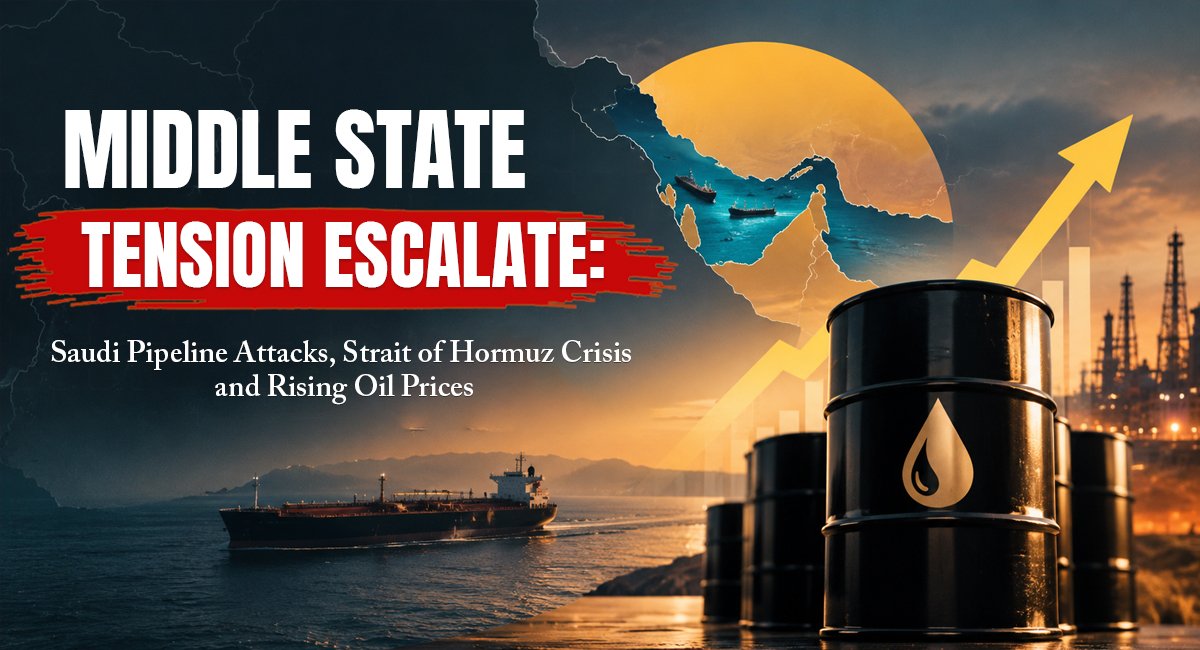
Middle
East Tensions Escalate: Saudi Pipeline Attacks, Strait of Hormuz Crisis and
Rising Oil Prices
The latest escalation in the Middle East is putting
global energy markets under fresh pressure. New attacks targeting Saudi Arabia,
disruption to the kingdom’s critical oil infrastructure and incidents involving
vessels around the Strait of Hormuz have increased fears of a wider energy
supply crisis.Oil markets reacted quickly. Brent crude moved above $106 a
barrel on September 15, while West Texas Intermediate also climbed above $102.
Reuters reported Brent at $106.93 a barrel and WTI at $102.65 during Tuesday
trading.
What Happened in Saudi Arabia?
Saudi Arabia is one of the world's biggest oil
producers. Its East-West pipeline carries oil from the country's eastern
oil-producing areas toward the Red Sea.This route is especially important
during a crisis because oil can reach international markets without travelling
through the Strait of Hormuz.The pipeline can normally move several million
barrels of oil every day. Its shutdown does not mean that all of this oil has
disappeared from the market, but it reduces one of Saudi Arabia's important
backup options.
What Is the Strait of
Hormuz?
The Strait of Hormuz is a narrow waterway between the Persian Gulf
and the Gulf of Oman.It is extremely important for the global energy market
because several major oil-producing countries use this route to send oil to
customers around the world.Because so much energy passes through the area, even
a small disruption can create concerns in the oil market.
Why Is the East-West Pipeline
So Important?
Saudi Arabia is one of the world's most important oil
producers, so any disruption to its export infrastructure immediately attracts
attention from global energy markets.The East-West pipeline crosses Saudi
Arabia and connects oil-producing areas in the east with the Red Sea port of
Yanbu. The pipeline can normally handle several million barrels of crude per
day. Reuters estimates that the route can redirect roughly 4 million barrels
per day, equivalent to around 4% of global oil supply.
This is why the pipeline shutdown has become a major
market concern.
.
Why Were the Planned Hormuz
Talks Postponed?
Diplomatic efforts have also suffered a setback.Gulf Arab
states and Iran had been expected to participate in talks concerning
arrangements for shipping through the Strait of Hormuz.The meeting, which was
planned in Oman, was postponed as tensions increased. Oman's foreign minister
said the delay was made in the interest of consensus, while reports indicated
that differences among Gulf countries and the deteriorating security situation
contributed to the postponement.The talks were significant because diplomacy
offered one possible route toward restoring safer commercial shipping. A
diplomatic solution may not arrive quickly enough to remove the current supply
risk.
Saudi Arabia Is Now Facing
Pressure From Multiple Directions
The situation is particularly difficult for Saudi Arabia
because several important energy routes are simultaneously exposed to risk.On
one side, shipping through the Strait of Hormuz has been severely disrupted.On
another, the East-West pipeline—which provides Saudi Arabia with an alternative
route to the Red Sea—has been taken offline after an attack.
Why Did Oil Prices Rise?
Oil prices are driven not only by current supply but also
by expectations about future supply.Traders are essentially asking:
How much oil will actually reach the global market if
these disruptions continue?
That uncertainty has pushed prices higher.
On September 14, Brent crude rose to around $107.51 per
barrel, while WTI reached approximately $102.32. On September 15, Reuters
reported Brent at $106.93 and WTI at $102.65.The market reaction reflects fears
that the crisis could become more prolonged rather than simply reflecting the
loss of one pipeline.
What Could Happen If the
Disruptions Continue?
The longer the disruptions continue, the greater the
potential impact on the global economy.
1. Higher Fuel Prices
More expensive crude can eventually translate into higher
petrol, diesel and other fuel prices, depending on local market conditions.
2. Higher Transportation Costs
Diesel and jet fuel are essential to road freight and
shipping. Higher energy costs can therefore increase transportation expenses.
3. Pressure on Food Prices
Transportation is part of almost every food supply chain.
Higher fuel and logistics costs can eventually put pressure on the price of
agricultural products and other everyday goods.
4. Inflation Risks
If energy prices remain elevated for an extended period,
central banks may have to consider the inflationary consequences.
5. Greater Shipping Disruption
If commercial vessels continue avoiding the region, ships
may have to take longer alternative routes, increasing both travel time and
operating costs.
Is This Another Global Oil
Crisis?
It is too early to say that the current situation will
develop into a full-scale global oil crisis.Much depends on how long the
pipeline remains offline, whether shipping through Hormuz can recover, whether
additional energy infrastructure is attacked and whether diplomatic efforts
eventually restart.
But the current combination is unusual because several
critical pieces of the Middle East's energy infrastructure and shipping network
are facing pressure at the same time.
That is what makes the situation particularly important
for global markets.
What Happens Next?
The next few days will be crucial.Markets will closely
watch whether Saudi Arabia can restore the East-West pipeline, whether vessel
traffic through the Strait of Hormuz begins recovering and whether Gulf states
and Iran return to negotiations..
For now, the message from the oil market is clear: the
longer the uncertainty continues, the greater the risk of further price
pressure.
Sources
· The Hindu
— Reports
on the latest Middle East tensions, Saudi Arabia and the Strait of Hormuz.
· The Straits
Times — Reports
on the Saudi East-West oil pipeline disruption, attacks and the impact on oil
supplies.



Discussion & Comments (0)
No comments yet. Be the first to share your thoughts on this story!
Leave a Comment