

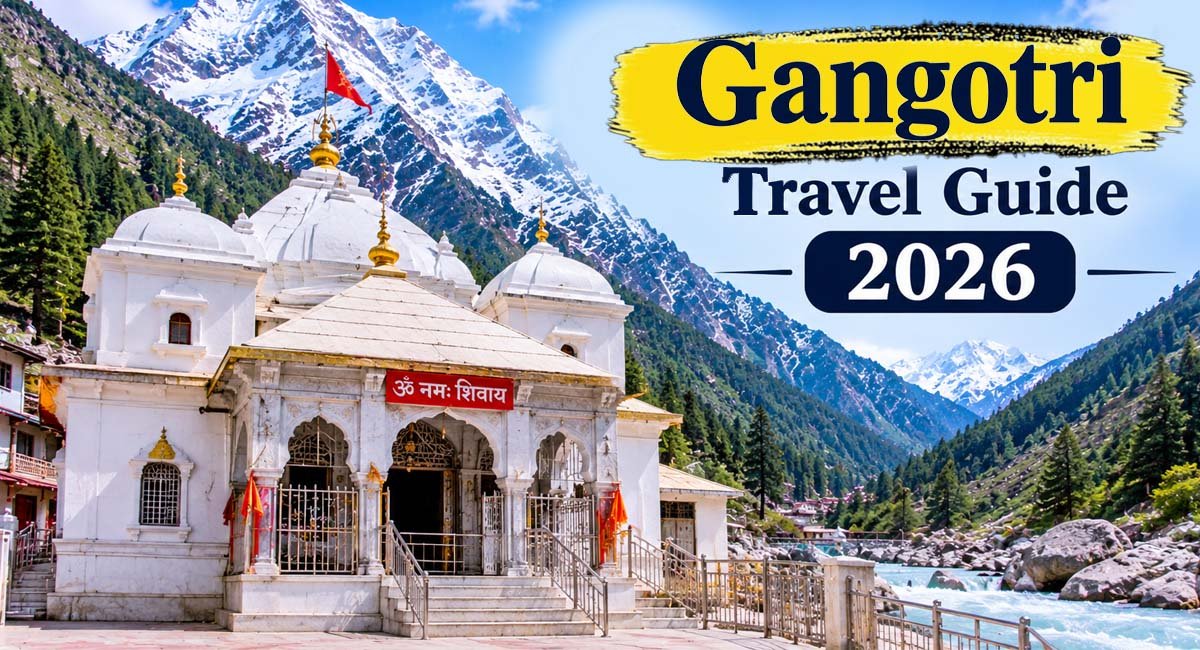
Gangotri Dham is one of the four sacred destinations of
Uttarakhand's Char Dham Yatra. Dedicated to Goddess Ganga, the temple stands
beside the Bhagirathi River in the Garhwal Himalayas. Unlike Yamunotri and
Kedarnath, pilgrims can reach Gangotri Temple directly by road, without
completing a compulsory trek.
However, the journey still needs proper planning. Travellers
have to cover long mountain routes, manage changing weather and arrange
accommodation in advance, particularly during the busy pilgrimage season.
There is also an important date to remember for 2026.
Gangotri Temple is scheduled to close for the winter season on November 10 at
12:05 PM. After the closure, devotees will be able to worship Goddess Ganga at
Mukhba, her traditional winter residence.
This guide covers the road route from Haridwar, temple
dates, nearby attractions, a practical itinerary and an estimated trip budget.
Where Is Gangotri Dham Located?
Gangotri Dham is situated in Uttarkashi district,
Uttarakhand, at an altitude of approximately 3,100 metres above sea level.
The temple is dedicated to Goddess Ganga and is located near
the Bhagirathi River. It is the second destination in the traditional
Uttarakhand Char Dham circuit, which begins at Yamunotri and continues through
Gangotri, Kedarnath and Badrinath.
One of the main advantages for pilgrims is direct road
access to the temple. Visitors do not need to complete an uphill trek for
regular darshan.
Gangotri is also the starting point for the Gaumukh trek.
Gaumukh, around 19 km from the temple, is the glacial source of the Bhagirathi
River, which becomes the Ganga after meeting the Alaknanda at Devprayag.
Religious Significance and History of Gangotri Temple
Gangotri holds a special place in Hindu traditions because
of its connection with the descent of Goddess Ganga to Earth.
According to Hindu mythology, King Bhagirath performed
intense meditation to bring Goddess Ganga from heaven to Earth to help liberate
the souls of his ancestors. Since the force of her descent was believed to be
too powerful, Lord Shiva caught the river in his matted hair before allowing it
to flow towards the Earth.
This story is closely associated with Gangotri and explains
its importance as a pilgrimage destination.
The temple was originally built by Gorkha commander Amar
Singh Thapa in the early 19th century and was later renovated by the Maharaja
of Jaipur.
Another important religious site is Bhagirath Shila, a
sacred stone near the temple. According to tradition, this is the place where
King Bhagirath meditated to bring Goddess Ganga to Earth.
Places to Visit Around Gangotri Dham
Gangotri offers more than temple darshan. Its surroundings
include religious sites, mountain valleys, waterfalls and trekking routes.
1. Gangotri Temple
The white Gangotri Temple is the main attraction of the
town. It stands close to the Bhagirathi River and is surrounded by Himalayan
peaks.
Devotees visit the shrine to offer prayers to Goddess Ganga.
The temple surroundings also include smaller religious sites and a local market
where visitors can find basic supplies and refreshments.
2. Bhagirath Shila
Bhagirath Shila is located near Gangotri Temple and is
associated with the legend of King Bhagirath.
Many devotees visit this sacred stone as part of their
pilgrimage. Its location near the main shrine makes it easy to include in a
regular temple visit.
3. Gaumukh Glacier
Gaumukh is traditionally regarded as the source of the
Bhagirathi River. It is approximately 19 km from Gangotri and can only be
reached on foot.
The trek passes through rocky mountain trails and
high-altitude landscapes. It requires more preparation than a regular temple
visit and is not suitable for every traveller.
Entry into Gangotri National Park requires a permit, and the
number of visitors allowed is limited. Check the latest permit arrangements and
trekking conditions through the Uttarakhand
Tourism website before planning the trek.
Regular Gangotri Temple darshan does not require this trek
or a Gaumukh permit.
4. Harsil Valley
Harsil is a scenic Himalayan destination located
approximately 25 km from Gangotri. The valley is known for its apple orchards,
deodar trees, mountain views and peaceful surroundings.
It is a good place to spend additional time after temple
darshan, especially for travellers who prefer a quieter mountain setting.
Harsil can also be considered for an overnight stay,
depending on accommodation availability.
5. Mukhba Village
Mukhba has special religious importance because it is
traditionally regarded as the winter home of Goddess Ganga.
When Gangotri Temple closes for winter, the ceremonial idol
of Goddess Ganga is brought to Mukhba. Devotees can continue offering prayers
at the village temple while the main shrine remains closed.
This makes Mukhba particularly important for people visiting
the region outside the regular Gangotri pilgrimage season.
6. Bhairon Ghati
Bhairon Ghati is a scenic mountain area near Gangotri, known
for its forests and the confluence of the Jat Ganga and Bhagirathi rivers.
The Bhairav Nath Temple is another religious attraction in
this area. Visitors can include it in their route if road conditions and
available time permit.
7. Surya Kund and Gauri Kund
Surya Kund is a waterfall on the Bhagirathi River near
Gangotri Temple. Gauri Kund is another nearby waterfall, connected to the area
by an iron bridge.
Both spots are worth visiting during a short walk around the
temple surroundings.
8. Pandava Gufa
Pandava Gufa is a small cave located approximately 1.5 km
from Gangotri Temple. According to local legends, the Pandavas stayed and
meditated here during their Himalayan journey.
Reaching the cave involves a walk through the surrounding
forest. Check local access and trail conditions before setting out.
How to Reach Gangotri Dham from Haridwar
Haridwar is a popular starting point for pilgrims travelling
to Gangotri. Visitors can reach Haridwar by train or road and continue towards
Uttarkashi and Gangotri by bus, shared vehicle or private taxi.
Approximate Road Distances
|
Starting point |
Approximate distance to Gangotri |
|
Haridwar |
250–290 km |
|
Rishikesh |
Around 270 km |
|
Uttarkashi |
Around 100 km |
|
Harsil |
Around 25 km |
Distances can vary depending on the starting point and
route. The Uttarkashi district administration lists Haridwar to Gangotri at
approximately 250 km and Uttarkashi to Gangotri at around 100 km.
The journey from Haridwar can take approximately 10–12 hours
or longer, depending on traffic, road conditions and weather.
Recommended Road Route
A commonly used route is:
Haridwar → Rishikesh → Chamba → Dharasu → Uttarkashi →
Bhatwari → Harsil → Gangotri
The route follows mountain roads along the Bhagirathi
valley. Travellers pass through small towns, forested stretches and scenic
Himalayan surroundings.
Uttarkashi is a useful stop for food, fuel and an overnight
stay before continuing towards Gangotri.
The Uttarkashi
district administration's Gangotri travel information provides additional
details about road access and transport options.
Reaching Gangotri by Bus or Taxi
State transport and local bus services operate on routes
connecting Uttarkashi with other towns in Uttarakhand. Shared vehicles and
taxis may also be available, particularly during the pilgrimage season.
Private taxis offer more flexibility but usually cost more
than shared transport.
If you are travelling with family or senior citizens,
consider breaking the journey with an overnight stay instead of attempting the
entire mountain drive without sufficient rest.
3-Day Gangotri Dham Itinerary from Haridwar
A three-day itinerary is possible for travellers whose main
purpose is temple darshan. However, it involves long drives and leaves limited
time for sightseeing.
Day 1: Haridwar to Uttarkashi
Start from Haridwar early in the morning, preferably around
5–6 AM.
Travel through Rishikesh, Chamba and Dharasu before reaching
Uttarkashi. Take breaks for meals and refreshments along the route.
After reaching Uttarkashi, check into your hotel or
guesthouse and rest.
Night stay: Uttarkashi.
Day 2: Uttarkashi to Gangotri and Harsil
Start early after breakfast and continue towards Gangotri.
After reaching the temple, offer prayers to Goddess Ganga.
You can also visit Bhagirath Shila, Surya Kund and Gauri Kund.
If time and road conditions permit, explore Harsil Valley
before checking into your accommodation.
Night stay: Gangotri or Harsil.
Day 3: Return to Haridwar
Start your return journey after breakfast.
The mountain drive is long, so allow enough time for breaks
and possible traffic delays. Avoid planning another long journey immediately
after reaching Haridwar.
This itinerary is suitable mainly for travellers who want to
complete darshan quickly. A four-day plan is more comfortable.
Is a 4-Day Gangotri Itinerary Better?
Yes. Four days give you more flexibility and reduce the
pressure of covering long mountain distances in a short period.
A practical plan is:
- Day
1: Haridwar to Uttarkashi.
- Day
2: Uttarkashi to Gangotri, temple darshan and overnight stay.
- Day
3: Explore Harsil Valley, Mukhba and nearby attractions.
- Day
4: Return to Haridwar.
This schedule is more suitable for families, senior citizens
and travellers who want to enjoy the surroundings rather than rush between
destinations.
If you are planning the Gaumukh trek, you will need
additional days, trekking preparation and the required permits. Do not combine
the trek with a tightly scheduled temple visit.
Best Time to Visit Gangotri Dham
The main pilgrimage season generally runs from April or May
until October or November, depending on the annual temple schedule.
April to June: These months are popular for Gangotri
visits. Daytime weather is comparatively pleasant, but mornings and evenings
can remain cold. Crowds may increase during holidays and around the temple
opening period.
July to August: The monsoon brings heavy rainfall to
parts of Uttarakhand. Landslides, road blockages and travel delays are
possible. Check weather forecasts and local road updates before starting your
journey.
September to October: These months are generally
suitable for pilgrimage travel. The weather often becomes clearer after the
monsoon, although temperatures begin dropping as winter approaches.
November to March: Gangotri Temple remains closed
during winter. Snowfall and difficult weather conditions can affect access to
the region. Devotees can visit Mukhba, the winter seat of Goddess Ganga,
subject to local weather and road conditions.
Gangotri Temple Opening and Closing Dates 2026
Gangotri Temple opened for the 2026 pilgrimage season on April
19, 2026, on the occasion of Akshaya Tritiya.
The temple is scheduled to close for winter on November
10, 2026, at 12:05 PM, on the occasion of Annakoot and Govardhan Puja.
After the closure, the ceremonial palanquin of Goddess Ganga
will leave for Mukhba Village. The deity's winter worship will continue there,
with the ceremonial arrival scheduled for November 11.
Travellers planning a Gangotri visit in 2026 should complete
temple darshan before the closing time. Those visiting after the closure should
plan around Mukhba instead of expecting regular darshan at the main Gangotri
shrine.
For registration and official pilgrimage information, use
the Uttarakhand Tourist
Care portal.
The 2027 opening date should be checked when the next annual
temple schedule is officially announced.
How Much Does a Gangotri Dham Trip Cost?
The cost of a Gangotri trip depends on the starting city,
number of travellers, transport, accommodation, food and length of stay.
For an initial budget plan, a three-day trip from Haridwar
may cost approximately ₹6,000–₹9,000 per person when travelling with
shared transport arrangements and using basic accommodation.
An illustrative budget is:
|
Expense |
Estimated cost per person |
|
Shared transportation |
₹3,000–₹4,500 |
|
Basic accommodation |
₹1,000–₹2,000 |
|
Food and refreshments |
₹1,000–₹1,500 |
|
Local expenses and sightseeing |
₹500–₹1,000 |
|
Estimated total |
₹5,500–₹9,000 |
These are planning estimates, not confirmed current fares or
package prices. Actual costs can be higher during peak pilgrimage dates.
A private taxi, better accommodation or an additional night
will increase the budget. Gaumukh trekking permits, guide arrangements and
trekking equipment should also be budgeted separately if you plan to visit the
glacier.
Check hotel rates and transport fares before departure
rather than relying entirely on an estimated online budget.
Important Travel Tips Before Visiting Gangotri
A Gangotri pilgrimage involves high-altitude travel and long
mountain drives. Keep these practical points in mind:
- Carry
warm clothing, even if you are travelling during summer.
- Wear
comfortable shoes with a good grip.
- Start
long road journeys early in the morning.
- Keep
some cash for small purchases and local expenses.
- Check
weather forecasts and road conditions before departure.
- Avoid
driving after dark on unfamiliar mountain roads whenever possible.
- Allow
sufficient rest time, especially when travelling with senior citizens.
- Complete
the required Char Dham registration and follow local administration
instructions.
- Do
not litter near the river, temple or trekking routes.
- For
Gaumukh, obtain the required permit and check current entry limits before
travelling.
Gangotri is situated at a high altitude. Travellers should
take time to adjust and avoid rushing their visit. Anyone experiencing unusual
breathlessness, severe headache, dizziness or nausea should stop and seek
medical advice rather than continuing the journey.
Frequently Asked Questions About Gangotri Dham
Q1. Where is Gangotri Dham located?
Gangotri Dham is located in Uttarkashi district,
Uttarakhand, in the Garhwal Himalayan region.
Q2. What is the altitude of Gangotri Temple?
Gangotri Temple is situated at approximately 3,100 metres
above sea level.
Q3. How far is Gangotri from Haridwar?
The road distance is approximately 250–290 km, depending on
the route and starting point. The journey can take around 10–12 hours or
longer.
Q4. Is trekking required to reach Gangotri Temple?
No. Vehicles can reach Gangotri Temple directly. A separate
trek is required to reach Gaumukh Glacier.
Q5. How long is the Gaumukh trek?
Gaumukh is approximately 19 km from Gangotri by trekking
route. Visitors need the required permit to enter Gangotri National Park.
Q6. What is the best time to visit Gangotri?
April to June and September to October are generally
suitable months, subject to the temple schedule and weather conditions.
Q7. When did Gangotri Temple open in 2026?
The temple opened on April 19, 2026, on Akshaya Tritiya.
Q8. When will Gangotri Temple close in 2026?
The scheduled winter closure is November 10, 2026, at 12:05
PM.
Q9. Can devotees visit Gangotri during winter?
The main temple remains closed during winter. Devotees can
worship Goddess Ganga at Mukhba, her traditional winter residence, subject to
local access and weather conditions.
Q10. How many days are enough for a Gangotri trip from
Haridwar?
Three days can be planned for a basic pilgrimage, but four
days are more comfortable for families and travellers who want to explore
Harsil and nearby places.
For anyone planning the 2026 pilgrimage, the temple's
November 10 closing time is the most important date to keep in mind. After
that, Mukhba becomes the place for devotees to continue their worship of
Goddess Ganga during the winter months.


Discussion & Comments (0)
No comments yet. Be the first to share your thoughts on this story!
Leave a Comment