

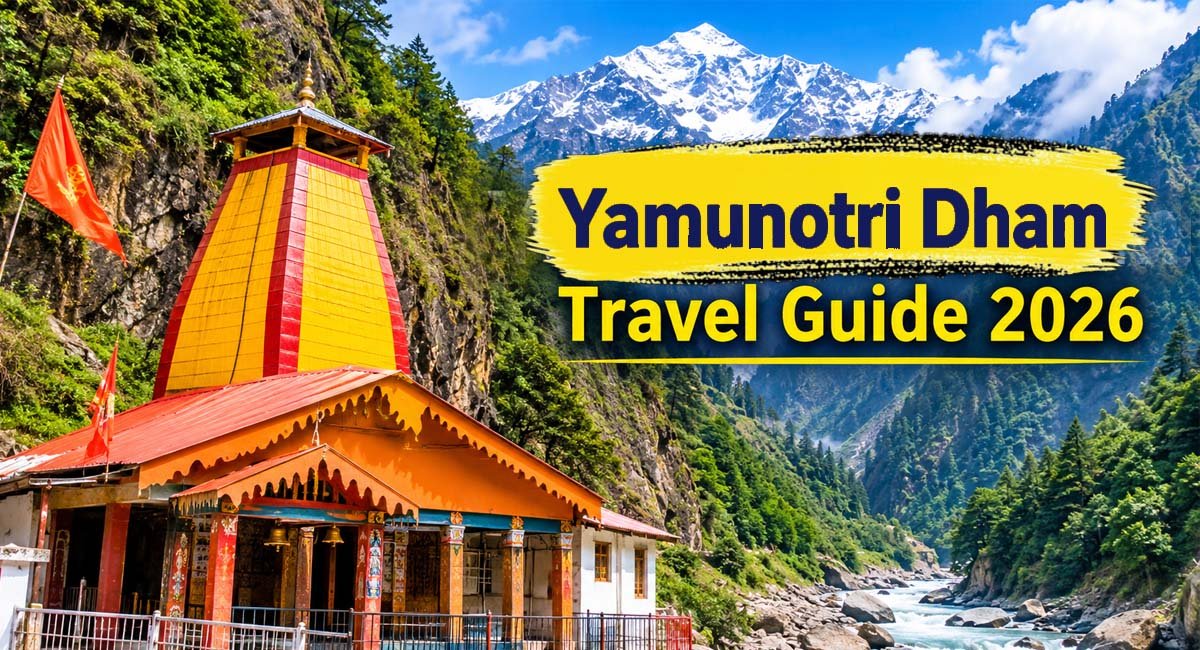
Yamunotri Dham is one of the most important pilgrimage
destinations in Uttarakhand. Located in the Garhwal Himalayas, the temple is
dedicated to Goddess Yamuna and marks the traditional beginning of the
Uttarakhand Char Dham Yatra.
The journey to Yamunotri is different from an ordinary road
trip. Travellers pass through mountain roads, small Himalayan towns and scenic
valleys before reaching Janki Chatti. From there, they have to complete an
uphill trek to reach the temple.
For pilgrims planning their journey in 2026, it is important
to understand the route, trekking distance, temple dates, accommodation options
and travel expenses.
If you are planning the complete pilgrimage, you can also
read our Char
Dham Yatra 2026 guide covering the route, registration and travel arrangements.
Where Is Yamunotri Dham Located?
Yamunotri Dham is located in the Uttarkashi district of
Uttarakhand, in the Garhwal Himalayan region. The temple stands at an altitude
of approximately 3,293 metres above sea level.
It is dedicated to Goddess Yamuna and is surrounded by
mountain peaks, forests and natural hot springs.
The motorable road ends at Janki Chatti. From here, pilgrims
have to complete an uphill trek of approximately 5–6 km to reach Yamunotri
Temple.
Pony, horse and palki services are also available for
visitors who find walking difficult, subject to local availability.
Yamunotri is traditionally the first destination of the
Uttarakhand Char Dham pilgrimage. Devotees generally continue towards Gangotri,
Kedarnath and Badrinath after visiting the shrine.
Religious Significance and History of Yamunotri Temple
According to Hindu mythology, Goddess Yamuna is the daughter
of Surya Dev, the Sun God, and the sister of Yamraj, the God of Death.
The Yamuna River is considered sacred, and Goddess Yamuna is
worshipped as a divine protector. Many devotees believe that worshipping the
goddess and bathing in her sacred waters can help cleanse sins and protect them
from the fear of death.
Yamunotri is also associated with Sage Asit Muni, who is
believed to have performed penance in this Himalayan region.
According to Uttarakhand Tourism, the original Yamunotri
Temple was built by Maharaja Pratap Shah of Tehri Garhwal. The shrine has
undergone repairs and reconstruction over the years because of natural damage.
Today, it remains an important pilgrimage centre for
devotees of Goddess Yamuna.
Places to Visit Around Yamunotri Dham
Apart from the main temple, pilgrims can explore several
religious and natural attractions in the surrounding region.
1. Yamunotri Temple
Yamunotri Temple is the main attraction of the pilgrimage.
Dedicated to Goddess Yamuna, the shrine houses an idol of the deity made of
polished black stone.
Devotees visit the temple to offer prayers and seek
blessings. Its location among the Himalayan slopes makes the journey
spiritually and visually memorable.
2. Surya Kund
Surya Kund is a natural hot water spring near Yamunotri
Temple. Its water temperature is extremely high, so it is not suitable for
direct bathing.
Devotees traditionally tie rice or potatoes in a cloth and
place them in the hot spring to cook. The cooked food is later offered to the
deity and taken home as Prasad.
3. Divya Shila
Divya Shila is a sacred rock located near Surya Kund.
According to traditional rituals, pilgrims worship Divya Shila before entering
Yamunotri Temple for darshan.
4. Saptarishi Kund
Saptarishi Kund is a high-altitude glacial lake situated at
approximately 4,421 metres above sea level. It is considered the geographical
source of the Yamuna River.
The lake is located above Yamunotri Temple and requires a
difficult trek through high-altitude terrain. It is not recommended for
ordinary pilgrims without proper mountain trekking experience and preparation.
5. Kharsali Village
Kharsali is a traditional Himalayan village near Yamunotri.
It is known for its wooden houses, mountain surroundings and religious
importance.
The village is also home to the Shani Dev Temple. After
Yamunotri Temple closes for winter, the worship of Maa Yamuna continues at
Kharsali, her traditional winter seat.
6. Hanuman Chatti
Hanuman Chatti is a mountain settlement along the Yamunotri
route. It is located near the confluence of the Hanuman Ganga and Yamuna
rivers.
The area is surrounded by mountains and forests, making it a
scenic stop during the pilgrimage.
How to Reach Yamunotri Dham from Haridwar
Haridwar is one of the popular starting points for the
Yamunotri pilgrimage. Travellers can reach the city by train, bus or private
vehicle before continuing towards the Himalayan region.
If you are planning to spend time in Haridwar before the
pilgrimage, our Haridwar
Travel Guide covering local markets, food, accommodation and the best time to
visit can help you plan that part of your trip.
Distance to Yamunotri Dham
Approximate distances to Janki Chatti are:
- Haridwar
to Janki Chatti: Around 210–220 km
- Rishikesh
to Janki Chatti: Around 200–210 km
- Dehradun
to Janki Chatti: Around 175–180 km
- Barkot
to Janki Chatti: Around 45–50 km
- Janki
Chatti to Yamunotri Temple: Around 5–6 km uphill trek
The road journey from Haridwar can take approximately 8–10
hours, depending on traffic, road conditions, weather and the route selected.
Recommended Road Route from Haridwar
A commonly used route is:
Haridwar → Dehradun → Mussoorie → Kempty Falls → Naugaon
→ Barkot → Hanuman Chatti → Janki Chatti → Yamunotri Temple
Vehicles can reach Janki Chatti, which serves as the last
motorable point for the pilgrimage.
Travellers should check current road conditions before
departure. During the monsoon season, heavy rainfall and landslides can affect
mountain roads.
Trekking from Janki Chatti to Yamunotri Temple
The final part of the Yamunotri Yatra begins at Janki
Chatti. Pilgrims have to complete an uphill trek of approximately 5–6 km to
reach the temple.
At a normal walking pace, the uphill journey generally takes
around 2–3 hours. The return journey may take approximately 1.5–2.5 hours.
Actual trekking time depends on fitness, crowd levels,
weather and the number of breaks taken.
Alternative Options for the Trek
Visitors who do not want to walk the entire route can
consider these options:
- Pony
or Horse: Available for pilgrims who find the uphill trek difficult.
- Palki
or Dandi: Can be hired for elderly visitors and people with limited
mobility.
- Kandi
or Pitthu: Local carrying services may be available depending on local
arrangements and applicable rules.
Before hiring any service, confirm the charges and
availability at Janki Chatti.
Trekking Tips for Yamunotri
- Wear
comfortable trekking shoes with a good grip.
- Carry
warm clothes, even during summer.
- Start
the trek early in the morning.
- Carry
drinking water and light snacks.
- Walk
at a comfortable pace and take regular breaks.
- Avoid
trekking in poor weather or after dark.
- Check
your health and fitness before attempting the uphill route.
3-Day Yamunotri Dham Travel Itinerary from Haridwar
A three-day itinerary is one option for travellers planning
a short Yamunotri pilgrimage from Haridwar.
Day 1: Haridwar to Barkot
Start your journey from Haridwar early in the morning,
preferably around 5–6 AM.
Travel via Dehradun, Mussoorie and Kempty Falls. You can
take short breaks for breakfast and lunch along the route.
Try to reach Barkot by evening. After checking into your
hotel or guesthouse, take some rest before the next day's trek.
Night Stay: Barkot
Day 2: Barkot to Yamunotri Temple and Return
Leave Barkot early in the morning and travel to Janki
Chatti.
From Janki Chatti, begin the 5–6 km uphill trek to Yamunotri
Temple. After reaching the shrine, offer prayers to Maa Yamuna.
You can also visit Surya Kund and Divya Shila as part of
your pilgrimage.
After completing darshan, return to Janki Chatti and travel
back to Barkot.
Night Stay: Barkot
Day 3: Barkot to Haridwar
After breakfast, begin your return journey towards Haridwar.
Enjoy the mountain views along the route and take breaks
wherever necessary.
Depending on traffic and road conditions, you may reach
Haridwar by afternoon or evening. From there, you can continue your journey to
your hometown by train or bus.
Is a 4-Day Yamunotri Itinerary Better?
A four-day itinerary can be more comfortable for families,
senior citizens and travellers who find long road journeys tiring.
An additional day allows you to reduce travel pressure, take
more rest and spend extra time exploring the surrounding region.
It is particularly useful if you do not want to combine long
road journeys with a demanding uphill trek in a short schedule.
Best Time to Visit Yamunotri Dham
The best time to visit Yamunotri is generally from April to
June and September to October, when weather conditions are comparatively
suitable for pilgrimage travel.
April to June: Summer is one of the most popular
periods for visiting Yamunotri. The weather is comparatively pleasant, and the
temple remains accessible during the pilgrimage season. Crowds can increase
during holidays and around the opening period.
July to August: The monsoon season brings heavy
rainfall to the Himalayan region. Landslides, road blockages and trekking
difficulties can occur. Travellers should check weather and road updates before
leaving.
September to October: These months are generally
suitable for the Yamunotri Yatra. The weather is often clearer after the
monsoon, although mountain conditions can change quickly.
November to March: Yamunotri Temple remains closed
during winter because of snowfall and extreme weather conditions. Devotees can
visit the winter seat of Maa Yamuna at Kharsali Village.
Yamunotri Temple Opening and Closing Dates 2026
Yamunotri Temple opened for the 2026 pilgrimage season on 19
April 2026, on the occasion of Akshaya Tritiya.
The temple is scheduled to close for the winter season on 11
November 2026, on Bhai Dooj, at 10:28 AM.
After the temple closes, the worship of Maa Yamuna continues
at Kharsali Village, her traditional winter abode.
Pilgrims planning a visit in November 2026 should complete
their darshan before the scheduled closing. Weather conditions and road
accessibility should also be checked before starting the journey.
For official pilgrimage information and registration,
visitors can use the Uttarakhand
Tourist Care registration portal.
Char Dham pilgrims must complete the required registration
and carry their registration confirmation during the journey.
How Much Does a Yamunotri Dham Trip Cost?
The total cost of a Yamunotri Dham trip depends on your
starting city, transportation, hotel, food and whether you choose to walk or
hire a pony or palki.
For a budget-friendly three-day trip from Haridwar, an
estimated expense of ₹4,500–₹6,500 per person may be used as an initial
planning figure.
This is a rough estimate from the original travel plan, not
a confirmed package rate. Actual expenses can be higher depending on the number
of travellers, accommodation, transport and additional services.
Before finalising your trip, check hotel prices, local
transportation fares and pony or palki charges.
Frequently Asked Questions About Yamunotri Dham
Q1. Where is Yamunotri Dham located?
Yamunotri Dham is located in the Uttarkashi district of
Uttarakhand, in the Garhwal Himalayas.
Q2. How much trekking is required to reach Yamunotri
Temple?
An approximately 5–6 km uphill trek is required from Janki
Chatti to Yamunotri Temple.
Q3. How many days are required for the Yamunotri Yatra?
A three-day itinerary can be planned for a short Yamunotri
trip from Haridwar. A four-day itinerary is more comfortable for families and
elderly travellers.
Q4. How much does a Yamunotri Dham trip cost?
The original budget estimate is around ₹4,500–₹6,500 per
person for a three-day trip from Haridwar. Actual costs depend on
transportation, accommodation, meals and additional services.
Q5. Is helicopter service available for Yamunotri Dham?
Chartered helicopter services may be offered for Yamunotri
through specialised operators, generally from Dehradun. These are not a regular
budget transportation option. Confirm the route, landing arrangements,
availability and charges with an authorised operator before booking.
Q6. What is the actual geographical source of the Yamuna
River?
Saptarishi Kund, a high-altitude glacial lake fed by the
Champasar Glacier, is considered the geographical source of the Yamuna River.
It lies above Yamunotri Temple and requires a difficult trek to reach.
Q7. When will Yamunotri Temple close in 2026?
Yamunotri Temple is scheduled to close for the winter season
on 11 November 2026 at 10:28 AM, on Bhai Dooj.
For pilgrims planning their journey, the most important
thing is to allow enough time for both the mountain drive and the uphill trek.
Starting early, checking road conditions and avoiding a rushed schedule can
make the Yamunotri Yatra safer and more comfortable.


Discussion & Comments (0)
No comments yet. Be the first to share your thoughts on this story!
Leave a Comment