

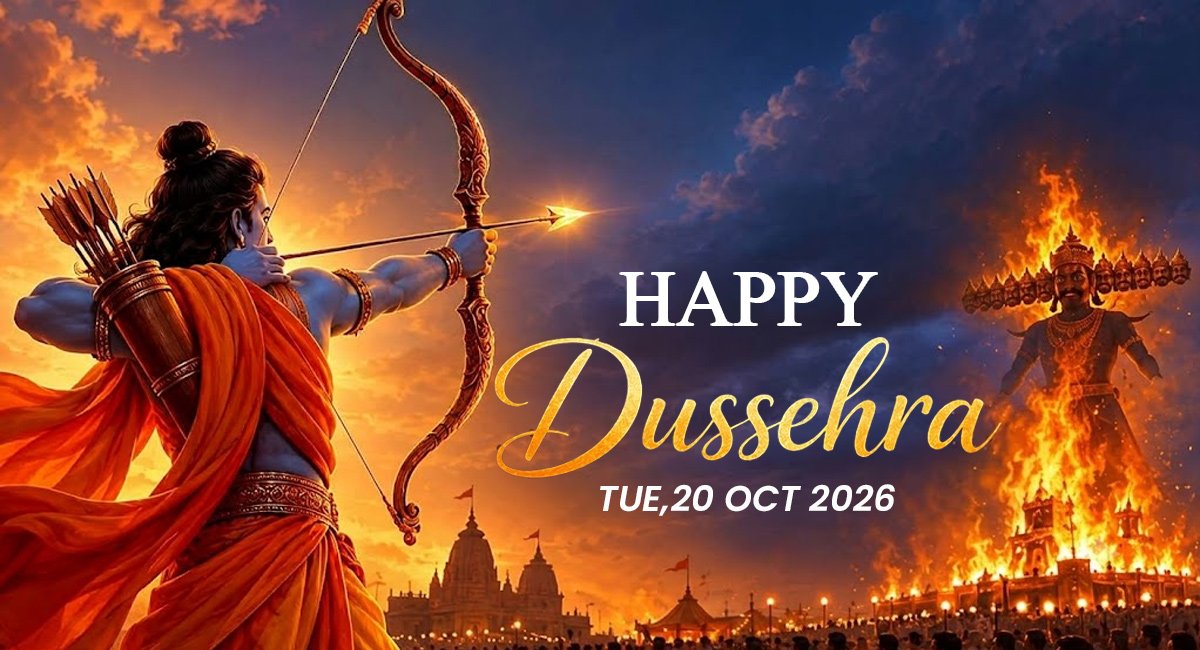
Dussehra, also known as Vijayadashami, is one of
the most important Hindu festivals in India. It symbolises the victory of good
over evil. On this day, people celebrate Lord Rama's victory over Ravana and
Goddess Durga's triumph over Mahishasura.Dussehra is celebrated at the end of
Sharad Navratri. On this occasion, devotees visit temples to offer prayers,
watch Ramlila performances, and participate in festive celebrations. In many
places, the festival is marked by the burning of effigies of Ravana, Meghnath,
and Kumbhkaran, a tradition known as Ravan Dahan.If you want to learn more
about Dussehra 2026, including its date, religious significance, puja vidhi,
and celebrations across India, this complete guide will help you explore
everything you need to know about the festival.
When Is
Dussehra 2026? (Date and Day)
Dussehra 2026 will be celebrated
across most parts of India on **Tuesday, 20 October 2026**. Also known as
Vijayadashami, this festival is observed on the Dashami Tithi of the Shukla
Paksha in the Hindu month of Ashwin.
• Dussehra Date: 20 October 2026
• Day: Tuesday
• Festival Name: Vijayadashami
• Significance: The victory of good
over evil
The exact timings of the Dashami
Tithi and puja muhurat may vary depending on the location. Therefore, it is
advisable to check your city's local Panchang before performing the puja.
Why Is Dussehra Celebrated? (Significance and
History)
Dussehra is celebrated based on
two major Hindu religious beliefs. Both stories share an important message: no
matter how powerful evil may seem, truth and goodness ultimately triumph over
evil.
Lord Rama's
Victory Over Ravana
According to the Ramayana, Ravana,
the king of Lanka, abducted Goddess Sita. To bring Sita back, Lord Rama fought
against Ravana with the help of his army and Lord Hanuman. During this battle,
Lord Rama defeated Ravana and rescued Goddess Sita. To commemorate this
victory, the tradition of Ravan Dahan is followed on Dussehra, in which
effigies of Ravana are burned at various locations. Ravana's ten heads are also symbolically associated with
ego, anger, greed, and other negative qualities. This festival reminds us to
overcome our negative habits, control our weaknesses, and follow the path of
truth and righteousness.
Goddess Durga's Victory Over Mahishasura
Dussehra is also associated with the story of Goddess Durga and
Mahishasura. According to Hindu religious beliefs, Goddess Durga fought against
Mahishasura and ultimately defeated him, bringing an end to his tyranny.
Goddess Durga's victory represents divine feminine power, courage, and the
triumph of righteousness over evil. This is why Dussehra is celebrated in many
parts of India as the culmination of Navratri and Durga Puja festivities.
Ravan Dahan 2026: What Is the Tradition?
Ravan Dahan is one of the most popular highlights of Dussehra
celebrations. On this day, large effigies of Ravana, Meghnath, and Kumbhkaran
are created in many cities and towns and burned in the evening as part of the
festivities.Before Ravan Dahan, Ramlila performances are organised in many
places. These dramatic performances depict important events from the life of
Lord Rama and key episodes from the Ramayana.The burning of Ravana's effigy
symbolises the end of evil and the victory of good over evil. Families and
friends gather to witness the event, enjoy festive fairs, and participate in
various cultural activities.
**Ravan Dahan Timing:** On 20 October 2026, local Ravan Dahan events may take place around sunset or later in the evening. The exact timing will depend on the city, local traditions, and the schedule announced by event organisers.
Dussehra 2026 FAQs
1. When Is Dussehra 2026?
Dussehra 2026 will be celebrated across most parts
of India on Tuesday, 20 October. The exact Vijayadashami Tithi timings and puja
rituals should be checked according to the local Panchang.
2. Why Is Dussehra Called Vijayadashami?
The name Vijayadashami is associated with victory
and the Dashami Tithi. The festival represents Lord Rama's victory over Ravana
and Goddess Durga's triumph over Mahishasura.
3. Why Is Ravan Dahan Performed on Dussehra?
Ravan Dahan symbolises Lord Rama's victory over
Ravana. This tradition conveys the message that good triumphs over evil and
righteousness prevails over wrongdoing.
4. Is Dussehra an Auspicious Day to Start Something New?
In many Hindu traditions, Dussehra is considered an
auspicious occasion to begin new projects, businesses, and important
activities. People can follow their family traditions and consult the local
muhurat before making plans.
5. What Is the Difference Between Dussehra and Navratri?
Navratri is a nine-night festival dedicated to the
worship of Goddess Durga and her different forms. Dussehra, also known as
Vijayadashami, marks the concluding celebration on the tenth day and symbolises
the victory of good over evil.
Conclusion: Celebrate Dussehra with the Message
of Good over Evil
Dussehra 2026 will be celebrated
on 20 october. This festival reminds us of the importance of truth, courage,
righteousness and positivity in our lives.Lord Rama's victory over Ravana and
Goddess Durga's triumph over Mahishasura convey the message that no matter how
powerful negative forces may seem, goodness and righteousness always hold great
importance. This Dussehra,take part in puja, Ramlila performances, Ravan Dahan
and family celebrations. Embrace the true message of the festival by practising
honesty , overcoming negativity and choosing the path of truth and goodness in
your daily life.
Discussion & Comments (0)
No comments yet. Be the first to share your thoughts on this story!
Leave a Comment