

The
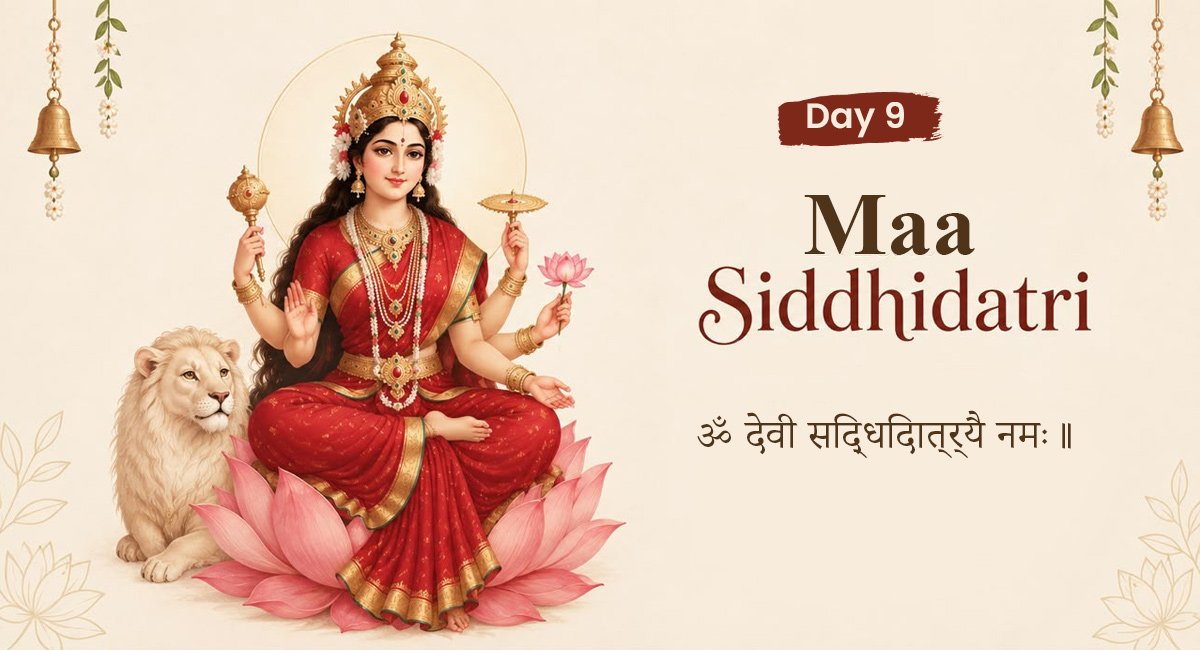
ninth day of Navratri is dedicated to Maa Siddhidatri, the ninth form of
Goddess Durga. Maa Siddhidatri is worshipped as the goddess of spiritual
powers, knowledge, and divine energy. On the final day of Navratri, devotees
worship the Goddess and pray for happiness, peace, and prosperity. Many
families also celebrate Mahanavami and perform Kanya Pujan on this day.Maa
Siddhidatri represents divine energy, wisdom, and spiritual fulfilment. Let’s
explore her puja vidhi, mantra, bhog, vrat katha, and religious significance.
Who is Maa Siddhidarti?
Maa Siddhidatri is the ninth form of Navdurga. Her
name means the Goddess who grants spiritual accomplishments and divine powers.
According to Hindu religious beliefs, Maa blesses her devotees with wisdom,
spiritual knowledge, and positive energy. Maa Siddhidatri is generally depicted
as a four-armed Goddess. She holds divine symbols such as a lotus, conch shell,
discus, and mace in her hands. She is seated on a lotus flower, and her divine
form symbolizes peace, strength, and grace. According to religious beliefs,
Lord Shiva attained spiritual powers through the blessings of Maa Siddhidatri.
Her worship reminds devotees of the importance of spirituality, devotion, and
inner peace.
Maa Siddhidatri Vrat Katha
According to Hindu mythology
the supreme divine energy played an important role in the creation of the
universe. Maa Siddhidatri is considered a powerful form of Adi Shakti, who
blesses devotees with divine knowledge and spiritual accomplishments. According
to Hindu beliefs , Lord Shiva attained the Ashta Siddhis or eight spiritual
powers, through the blessings of Maa Siddhidarti. With the Goddess's divine
energy, one half of Lord Shiva's body manifested in the form of the Goddess,
giving rise to the form known as Ardhanarishwar.This story represents the
balance between feminine and masculine energies. The spiritual message of Maa
Siddhidatri's worship is that devotion , knowledge and humility can help us
find inner balance , peace and fulfilment in life.
Maa Siddhidarti Puja Vidhi
On the ninth day of Navratri , devotees wake up
early in the morning, take a bath and wear clean clothes .They clean the puja
area and place an idol or picture of Maa Durga for worship. Devotees then offer
flower, kumkum, akshat ( unbroken rice grains ) fruits and traditional bhog to
the Goddess. They chant Maa Siddhidarti's mantra and may also recite the Durga
Chalisa or perform Durga Aarti. On Navami , many families also perform Kanya
Pujan. During this ritual, young girls are worshipped as forms of Maa Durga and
offered food , gifts or dakshina. At the end of the puja, devotees pray to Maa
Siddhidatri for their family's happiness, peace and prosperity.
Maa Siddhidarti Mantra
During Maa Siddhidarti puja, devotees can chant
this mantra:
ॐ देवी सिद्धिदात्र्यै नमः॥
Om Devi Siddhidatryai Namah
The mantra means offering
prayers to Maa Siddhidatri and seeking her divine blessings. Devotees can chant
the mantra 11, 21, or 108 times according to their faith and devotion.
What Bhog Is Offered to Maa Siddhidatri?
According to traditional beliefs, sesame seeds (til) are offered to Maa Siddhidatri. Fruits, halwa, puri, and other sattvik dishes may also be included in the bhog, depending on family traditions. On Navami, preparing halwa, puri, and black chickpeas (kale chane) for Kanya Pujan is a popular tradition in North India. While preparing the bhog, devotees should maintain cleanliness and offer prasad to Maa Siddhidatri with faith and devotion.
Significance of Worshipping
Maa Siddhidarti
Worshipping Maa Siddhidarti symbolizes spiritual
growth, wisdom and inner peace. According to Hindu religious beliefs,the
Goddess blesses her devotees with the Ashta Siddhis or spiritual powers. By
worshipping her on the final day of Navratri devotees complete their spiritual
journey with gratitude , faith and devotion.
Conclusion
Maa Siddhidarti is the ninth form of Navdurga. Her
worship , mantra chanting and Kanya Pujan are important rituals of Navratri.
This auspicious day reminds us of the importance of knowledge, humility,
kindness and devotion in our lives.
Discussion & Comments (0)
No comments yet. Be the first to share your thoughts on this story!
Leave a Comment