

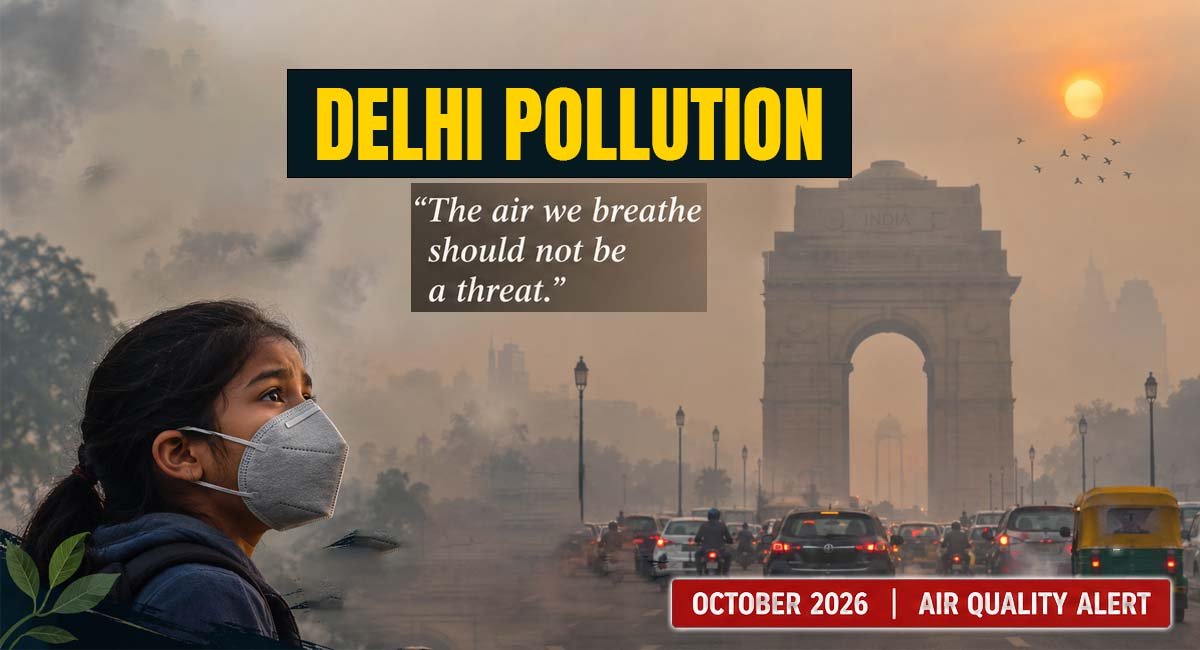
The pollution
problem in Delhi has started worsening once again. After air quality
deteriorated during the last week of October, concerns about people's health
and daily routines have increased. With the onset of the winter season,
pollution levels in Delhi tend to rise, affecting the daily lives of residents.
According to
reports published on October 22, 2026, Delhi's overall Air Quality Index (AQI)
was recorded at 226 at 7 AM, placing it in the Poor category. Pollution levels
were even higher in some areas. To control air pollution, the Commission for
Air Quality Management (CAQM) has implemented Stage 1 measures under the Graded
Response Action Plan (GRAP) across Delhi-NCR.
Delhi AQI
Today: Which Areas Are Experiencing Higher Pollution?
Pollution levels are not the same
across every area of Delhi. Traffic congestion, construction activities, road
dust, and local weather conditions can cause AQI readings to vary between
monitoring stations.
According to reports from October
22, 2026, the AQI readings in some areas were as follows:
• Chandni
Chowk: AQI 306 — Very Poor
• Jahangirpuri: AQI 309 — Very Poor
• Rohini: AQI 226 — Poor
• Anand Vihar: AQI 237 — Poor
• ITO: AQI 280 — Poor
• Patparganj: AQI 298 — Poor
• Alipur: AQI 273 — Poor
These readings are based on
specific monitoring stations and reporting times. They should not be treated as
averages for the entire locality or as current live AQI figures, as pollution
levels can change throughout the day.
If you live in Delhi, checking the latest AQI for
your area can help you make informed decisions about outdoor activities.
Why Is
Pollution Increasing in Delhi?
1. Vehicle Emissions
2. Stubble Burning
3. Construction and Road Dust
4. Changing Weather Conditions
5. Festive Activities
What Is GRAP Stage1 and why has it been
implemented in Delhi?
After Delhi's AQI entered the Poor category , the commission for Air Quality Management implemented GRAP Stage 1 on October 21, 2026. GRAP stands for Graded Response Action Plan , a system designed to control air pollution through different measures depending on air quality levels. An AQI between 201 and 300 falls under the Poor category. Key measures under GRAP Stage1 include mechanical road cleaning, water sprinkling , dust control at construction sites , preventing open waste burning , checking vehicle emissions and inspecting industries. According to reports , Delhi Metro also introduced 20 additional weekday train trips from October 22 to encourage publlic transport use. GRAP Stage 1 does not automatically mean school closures or mandatory work from home arrangements. Any further restrictions depend on official orders and changing air quality conditions.
How to Protect
Your Health from Delhi Pollution
When air quality deteriorates in
Delhi, following a few simple precautions can help reduce exposure to air
pollution. Check your local AQI before planning outdoor activities and avoid
outdoor running or heavy exercise when pollution levels are high. If going
outside is necessary, wearing a well-fitting N95 mask can help reduce exposure
to harmful particles. Keep indoor spaces clean and consider using a suitable
air purifier if possible. Children, elderly people, and those with asthma or
heart and lung conditions should take extra precautions.
If you experience persistent coughing,
wheezing, chest tightness, or difficulty breathing, seek medical advice.
Conclusion: Why Is Controlling Delhi Pollution Important?
Delhi's rising pollution levels in
late October are a growing concern. Poor AQI readings, Very Poor air quality in
some areas, and the implementation of GRAP Stage 1 highlight the need for
regular air quality monitoring during the winter season. Vehicle emissions,
construction dust, stubble burning, and unfavourable weather conditions can all
contribute to pollution. Controlling this problem requires government action as
well as cooperation from industries, commuters, and residents. Delhi residents
should regularly check their local AQI, plan outdoor activities accordingly,
and follow official updates regarding pollution levels and restrictions.



Discussion & Comments (0)
No comments yet. Be the first to share your thoughts on this story!
Leave a Comment