

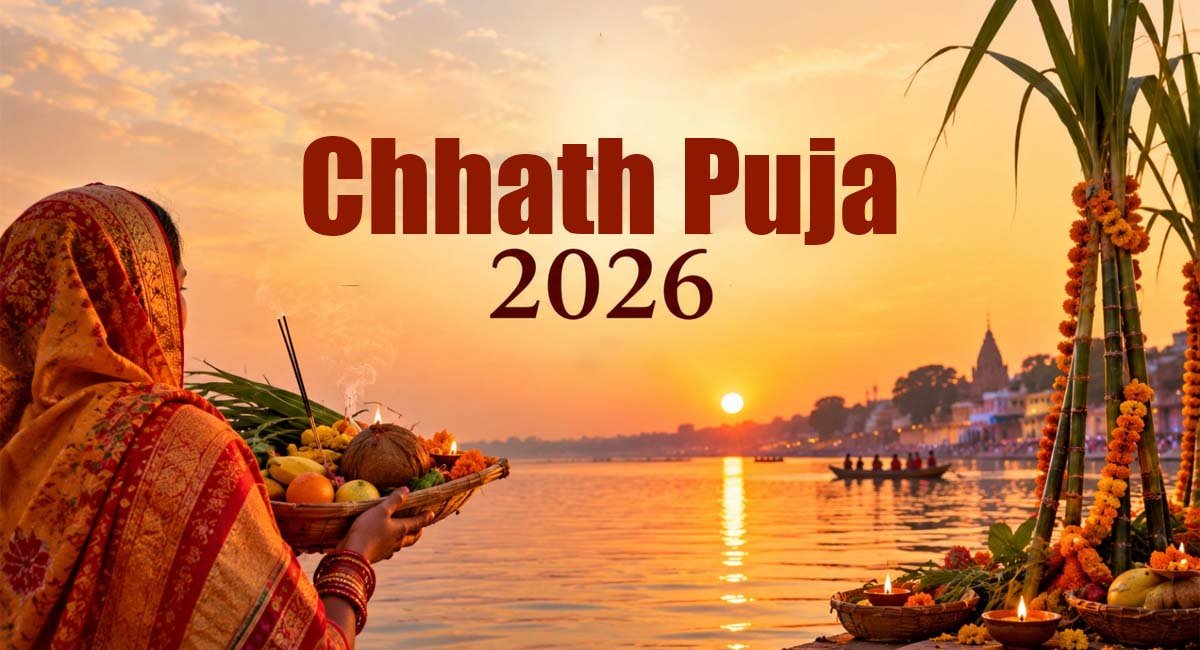
Chhath Puja is one of the most important Hindu festivals
dedicated to Lord Surya, the Sun God, and Chhathi Maiya. It is celebrated with
great devotion, particularly in Bihar, Jharkhand and eastern Uttar Pradesh. The
festival is also observed in Nepal and by communities living in cities such as
Delhi and Mumbai.
Unlike many other Hindu festivals, Chhath Puja includes
prayers to both the setting and the rising Sun. Devotees observe strict fasting
rituals, prepare traditional offerings and gather near rivers, ponds and other
water bodies. The festival is associated with prayers for good health, family
well-being and the prosperity of children.
Chhath Puja 2026 will be observed from November 13 to
November 16. Here is a look at its dates, four-day rituals, traditional
offerings and cultural significance.
Readers can also check our guide to Diwali
2026 date, Lakshmi Puja muhurat and the five days of celebrations for more
information about the festive calendar and traditions observed earlier in
November.
Chhath Puja 2026: Date and Four-Day Calendar
Chhath Puja is observed during the Shukla Paksha of the
Hindu month of Kartik. The main evening offering takes place on Kartik Shukla
Shashthi, which is why the festival is also known as Surya Shashthi.
The celebrations follow a four-day schedule:
|
Date |
Day |
Ritual |
|
November 13, 2026 |
Friday |
Nahay Khay |
|
November 14, 2026 |
Saturday |
Kharna |
|
November 15, 2026 |
Sunday |
Sandhya Arghya |
|
November 16, 2026 |
Monday |
Usha Arghya and Parana |
1. Nahay Khay – November 13
Nahay Khay marks the beginning of Chhath Puja. Devotees take
a bath, clean their homes and prepare for the upcoming rituals. They eat a
simple saatvik meal, following traditional practices of cleanliness and purity.
2. Kharna – November 14
On the second day, devotees observe a fast throughout the
day. In the evening, they perform the Kharna rituals and prepare prasad, which
commonly includes jaggery-based kheer and roti. After the prayers, the prasad
is shared with family members.
Following Kharna, devotees begin the more demanding fasting
period, which generally continues until the morning rituals on the final day.
3. Sandhya Arghya – November 15
The third day is the main evening worship of Chhath Puja.
Devotees visit riverbanks, ponds and designated ghats with baskets of
offerings. They offer arghya to the setting Sun while praying for their
family's health and well-being.
4. Usha Arghya – November 16
On the final morning, devotees return to the ghats before
sunrise. They offer arghya to the rising Sun and complete the main rituals.
After Usha Arghya, they perform Parana, which marks the end of the fast.
What Is the History and Significance of Chhath Puja?
Chhath Puja has deep connections with ancient traditions of
Sun worship. In Hindu beliefs, Lord Surya represents light, energy and life.
The Sun is essential for nature and the growth of crops, making its worship an
expression of gratitude for the natural forces that support life.
Several stories from Hindu mythology are also associated
with the festival. One popular belief connects Sun worship with Karna from the
Mahabharata, who is traditionally described as a devoted worshipper of Lord
Surya. Stories involving Draupadi and the Pandavas are also linked to the
festival in some traditions.
Chhathi Maiya is equally important to the celebrations.
Devotees seek her blessings for the well-being of children, family happiness
and prosperity. Different communities may follow their own stories and customs,
but devotion to the Sun and the importance of discipline remain central to the
festival.
Why Are Both the Setting and Rising Sun Worshipped?
One of the distinctive features of Chhath Puja is that
devotees offer prayers to the setting Sun before worshipping the rising Sun the
next morning.
Sandhya Arghya expresses gratitude to the setting Sun. It
recognises the importance of the Sun throughout the day and reflects respect
for nature's continuous cycle.
Usha Arghya is offered to the rising Sun. It is associated
with hope, renewal and the beginning of a new day. Together, these rituals
represent gratitude, patience and faith.
The festival also brings families and communities together.
People prepare offerings, clean the surroundings and make arrangements at local
ghats before the main rituals.
Chhath Puja Prasad and Traditional Offerings
Food and traditional offerings are an important part of
Chhath Puja. They are prepared with care and according to family customs.
Some commonly prepared offerings include:
- Thekua:
A traditional sweet made with wheat flour, jaggery or sugar and ghee. It
is one of the best-known Chhath offerings.
- Fruits:
Bananas, coconuts and seasonal fruits are arranged in puja baskets.
- Sugarcane:
Sugarcane is commonly included in the offerings and puja arrangements.
- Kheer
and roti: Jaggery-based kheer and roti are traditionally prepared for
Kharna.
- Soop
and daura: These traditional bamboo baskets are used to carry fruits,
thekua and other puja items to the ghats.
The exact offerings can vary between families and regions,
but cleanliness and care in their preparation remain important parts of the
observance.
Where Is Chhath Puja Celebrated?
Bihar is one of the main centres of Chhath Puja
celebrations. Cities such as Patna, Gaya and Muzaffarpur see large gatherings
of devotees at riverbanks and ghats.
The festival is also widely celebrated in Jharkhand and
eastern Uttar Pradesh. Varanasi and Gorakhpur are among the places where
devotees gather near rivers and other water bodies to perform the rituals.
In Delhi, Mumbai and other metropolitan cities, local
communities and cultural organisations arrange designated places for Chhath
celebrations. The festival is also observed in parts of Nepal and by Indian
communities living abroad.
These celebrations help keep regional traditions alive, even
among families who have moved away from their hometowns.
Chhath Puja and Environmental Responsibility
Chhath Puja has a close connection with nature. Water bodies
and sunlight are central to its rituals, making clean surroundings especially
important during the celebrations.
Devotees and visitors can support cleaner celebrations by
avoiding single-use plastic, disposing of waste responsibly and keeping puja
materials away from polluted water. People should also follow local
instructions at ghats, especially where large crowds are expected.
Community participation can help make the festival safer and
cleaner while respecting the natural spaces used for worship.
Chhath Puja 2026: What Devotees Should Know
Chhath Puja 2026 will begin with Nahay Khay on Friday,
November 13, and conclude with Usha Arghya and Parana on Monday, November 16.
The main Sandhya Arghya will take place on Sunday, November 15.
The festival is not only about fasting and prayers. Its
traditions bring families together and encourage respect for nature, discipline
and community participation. For devotees preparing to visit a ghat, it is also
important to check local arrangements and follow the timings and safety
instructions issued by the authorities.



Discussion & Comments (0)
No comments yet. Be the first to share your thoughts on this story!
Leave a Comment