

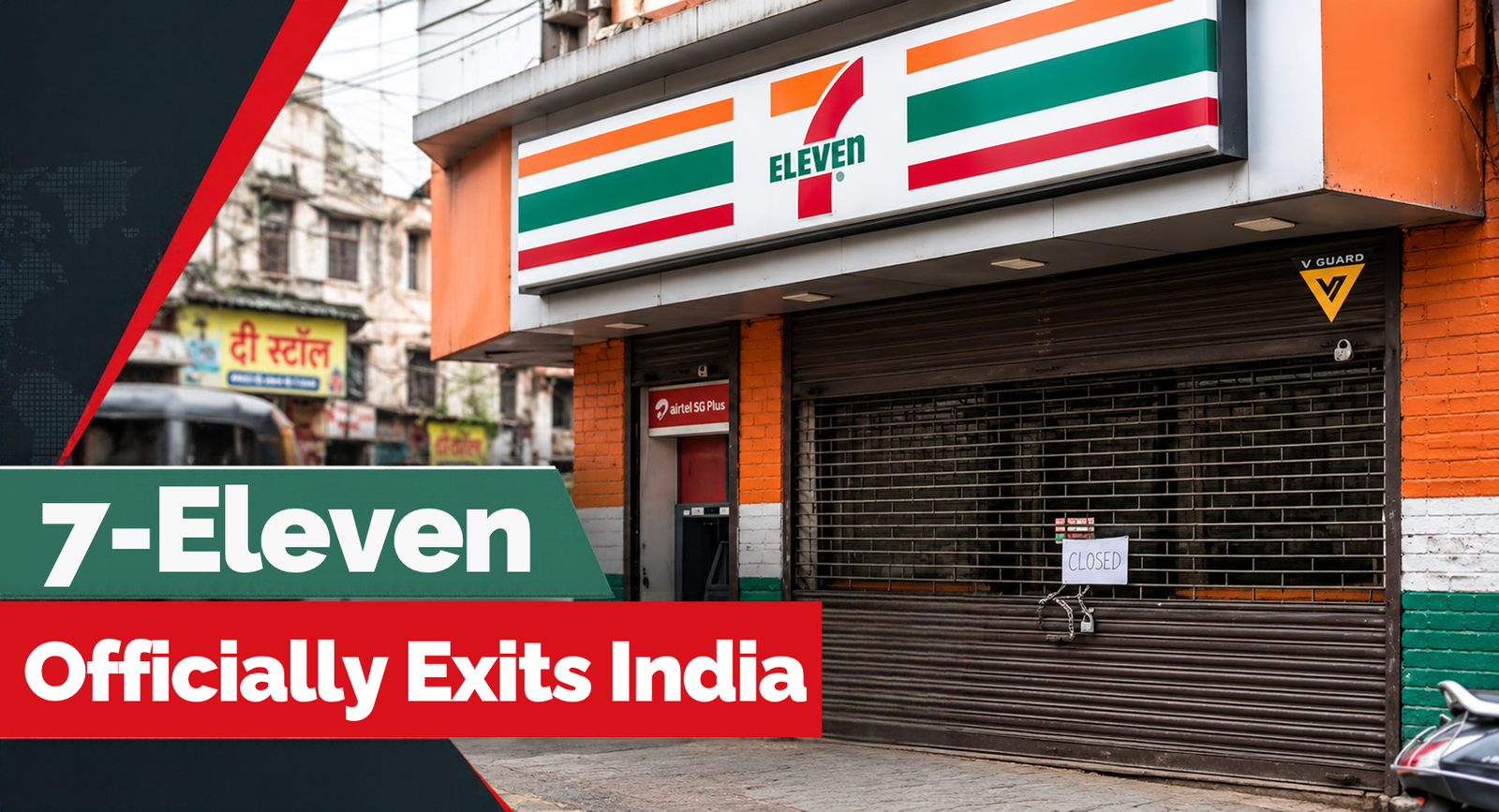
7 Eleven has officially closed all its stores in India after running its business for around five years. The global convenience store brand has shut its remaining 31 outlets in Mumbai and Pune. This marks the end of its current business operations in India after its partnership with Reliance Retail came to an end in September 2026.
The news has come as a surprise for many people who were
expecting the brand to grow more in the Indian market. 7 Eleven first entered
India in October 2021. At that time the company had plans to bring its popular
convenience store model to Indian customers.
How 7 Eleven Started Its Business in India
7 Eleven is a well known convenience store chain which is
famous for snacks, cold drinks, ready to eat food and daily use products.
People can visit these stores to buy small things without going to a big
supermarket.
The company entered India with the help of Reliance Retail.
Its first store opened in Mumbai in October 2021. After that the brand slowly
increased its presence and had around 60 stores at its peak.
But the business did not grow as expected. By September 2026
only 31 stores were left and all of them were closed by the end of the month.
Why Did 7 Eleven Leave India
One of the biggest reasons behind this development is the
tough competition in the Indian market. Local kirana stores have been serving
customers for many years and people are already used to buying their daily
needs from these shops.
Kirana stores are present in almost every neighbourhood.
Customers can easily visit them for milk, snacks, cold drinks and other
products. Many local shop owners also know their regular customers which makes
shopping more easy for them.
Another big challenge came from quick commerce apps like
Blinkit and Zepto. These platforms allow people to order groceries and other
daily products from their homes. In many areas customers can get their orders
within a few minutes.
This made things difficult for 7 Eleven because people could
either visit a nearby kirana shop or order products through an app. Running
physical stores also comes with expenses like rent, staff salaries and delivery
costs.
However the companies have not publicly confirmed one
specific reason for closing all the stores. Competition and business losses
have been reported as major challenges faced by the venture.
What Does This Mean for the Indian Retail Market
The exit of 7 Eleven shows how difficult it can be for a
global brand to grow in India. A business model which works well in one country
may not get the same response in another market.
Indian customers have many options when it comes to buying
daily products. They can visit local shops, supermarkets or use quick commerce
apps. Because of this companies need to offer something different if they want
people to choose their stores.
For 7 Eleven the challenge was not only opening stores but
also making the business profitable. Reports have said that its Indian business
recorded a net loss of nearly 90 crore rupees in the financial year ending
March 2026.
Is 7 Eleven Leaving India Forever
The closure of all its stores does not mean that 7 Eleven
has completely given up on India for the future. Its parent company Seven and i
Holdings has said that it still wants to serve Indian customers and is looking
at different options for a possible presence in the country.
This means the brand may explore another way to enter the
market in the coming years. However there is no confirmed announcement about
when or how it could return.
For now all 31 stores in Mumbai and Pune have closed and its
current business operations in India have come to an end. The exit also shows
how local shops and quick commerce apps are changing the way people buy
everyday products.
The Indian retail market is growing but competition is also
getting stronger. For any brand entering this market understanding local
customers and keeping costs under control will be very important.



Discussion & Comments (0)
No comments yet. Be the first to share your thoughts on this story!
Leave a Comment