

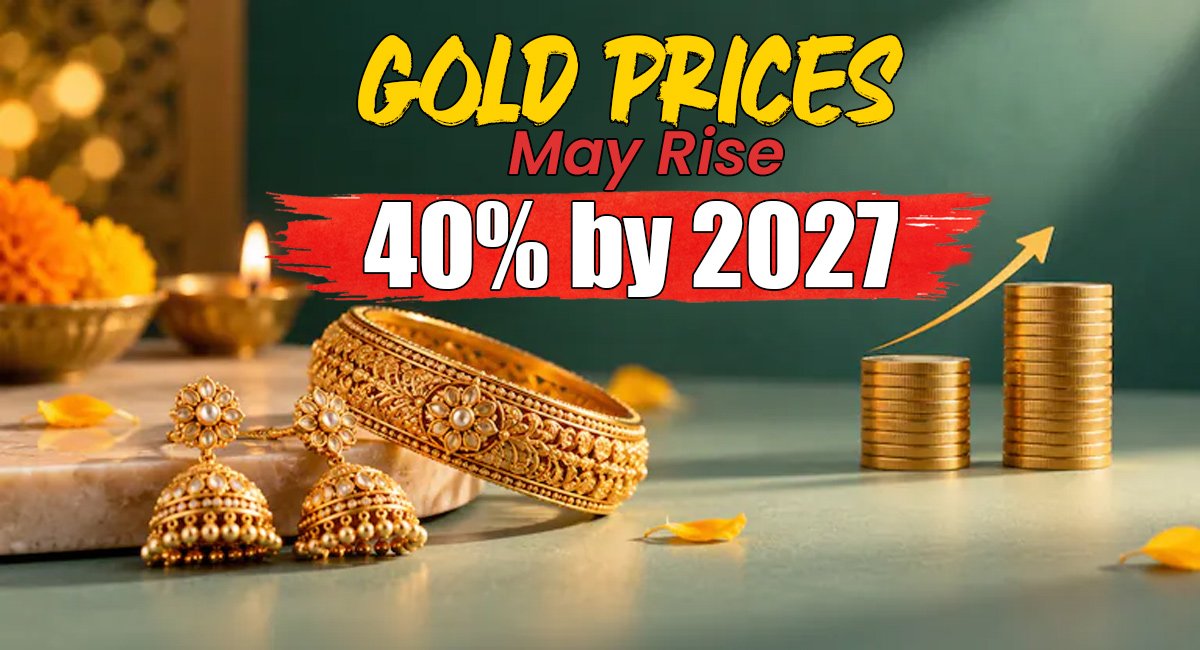
Gold prices have remained in focus as investors look ahead
to the next festive season. After a strong rise over the past few years, market
experts believe gold could see further gains by Dhanteras 2027. Some forecasts
suggest a possible increase of 20% to 40% over the next year.
Gold has always been an important part of Indian festivals
and family traditions. Buying gold on Dhanteras
is considered auspicious, while many families also see it as a long-term way to
save money. You can also read our guide to Diwali
2026, including its date, Lakshmi Puja muhurat and five-day calendar.
However, gold prices can move in both directions. The latest
forecasts are based on market conditions and expert estimates, not guaranteed
returns.
Gold Price Prediction for Dhanteras 2027
According to market experts, gold prices could rise further
over the next year.
Surendra Mehta, Secretary of the India Bullion and Jewellers
Association (IBJA), said gold prices could increase by around 30% to 40% over a
one-year period. He also noted that predicting short-term price movements can
be difficult.
Renisha Chainani, Chief Research Officer at Augmont, has
given a target of around ₹1.75 lakh per 10 grams for MCX gold by Diwali 2027.
This would represent an increase of approximately 20% from the reference price
of ₹1.45 lakh per 10 grams used in her estimate.
These forecasts show that experts remain positive about gold
over the longer term. However, their targets are different and actual prices
will depend on market conditions.
Why Could Gold Prices Increase in 2027?
Several factors could support gold prices over the coming
year.
1. Central Bank Gold Buying
Central banks around the world continue to add gold to their
reserves. According to the market data cited in the latest expert outlook,
central banks purchased 321 tonnes of gold in the third quarter, 42% more than
the same period last year.
Continued buying can support demand and help gold prices
over the longer term.
2. Interest Rate Expectations
Changes in US interest rates can affect gold prices. If
inflation comes down and the US Federal Reserve starts cutting interest rates
in 2027, bond yields and the US dollar could weaken.
This may make gold more attractive to investors because gold
does not pay interest.
3. Demand for Gold ETFs
Investment demand is another important factor. Gold ETF
holdings reached a record 4,256 tonnes, according to the data cited in the
latest forecast.
Higher demand for gold-backed investment products can also
support the market.
4. Global Economic Uncertainty
Economic uncertainty and geopolitical tensions can increase
demand for gold. Many investors consider it a safe-haven asset during periods
of market instability.
These factors may support prices, but they do not guarantee
that gold will continue to rise.
How Much Has Gold Increased in the Last 10 Years?
Gold has delivered strong returns over the past decade,
although prices have not increased every year.
MCX gold prices rose from around ₹29,989 per 10 grams on
Dhanteras 2016 to ₹1,43,184 per 10 grams on November 5, 2026. This represents
an increase of approximately 365%.
The journey also included periods of decline. Gold prices
fell by around 5.6% in 2021, while the market recorded strong gains of 30.6% in
2024 and 61.5% in 2025, according to the historical figures reported by
Moneycontrol.
This performance shows why gold has attracted long-term
investors. However, past returns do not predict future performance.
What Could Affect Gold Prices?
Despite the positive forecasts, some risks could limit the
rise in gold prices.
- Higher
US inflation: If inflation remains high, interest rates may stay
elevated for longer.
- Stronger
US dollar: A stronger dollar can put pressure on international gold
prices.
- Interest
rate changes: Further rate increases could reduce gold's appeal.
- Currency
movement: Changes in the value of the Indian rupee can affect domestic
gold prices.
- Global
demand: A fall in investment or jewellery demand could also affect
prices.
Investors should keep these risks in mind before making
decisions based on price forecasts.
How Should Investors Approach Gold in 2027?
Experts generally advise investors to avoid putting all
their money into gold at one price. Buying in smaller amounts over time can
help manage the risk of market fluctuations.
Renisha Chainani has suggested keeping a core gold
allocation of around 15% to 20% in a portfolio. This is her expert view and may
not be suitable for every investor.
People buying gold for personal use can consider hallmarked
jewellery. Those investing for financial goals may also look at gold ETFs or
gold mutual funds after understanding their costs and risks.
It is also important to keep jewellery purchases separate
from investment decisions because making charges and other costs can affect the
value received when selling jewellery.
What to Expect From Gold by Dhanteras 2027
Gold could see further gains by Dhanteras 2027 if central
bank demand, investment buying and global economic conditions remain
supportive. Some experts have suggested a possible rise of 20% to 40%, while
other market forecasts are more moderate.
For example, Business Standard also reported different
analyst targets, including a 12-month MCX gold target of ₹1.68 lakh per 10
grams from Motilal Oswal Financial Services. This shows that price expectations
vary across analysts.
Investors should therefore treat these numbers as estimates
rather than promises. Gold may remain an important part of long-term
portfolios, but its prices can still experience sharp movements.



Discussion & Comments (0)
No comments yet. Be the first to share your thoughts on this story!
Leave a Comment