

Every year
on September 28 the great freedom fighter and revolutionary Shaheed Bhagat Singh’s
birth anniversary is celebrated. Bhagat Singh was born on September 28, 1907 in
Banga village, Lyallpur district which was part of British India at that time
and currently is in Pakistan.
Bhagat
Singh dedicated half of his life to struggle against the British rule in India.
Only at an early age of 23 years, he sacrificed himself and became the biggest
revolutionaries in Indian freedom movement.
Early Life
& Family Background
Bhagat
Singh was born in a family whose connection were with India’s freedom movement.
His father Kishan Singh and both of his uncles Ajit Singh and Swaran Singh were
connected to the nationalist activities. He heard stories about independence of
country and struggles of freedom fighters since his childhood. This environment
had a very big impact on his thinking. Along with his growing age his interest
in history, politics, literature and revolutionary ideas also grew up.
Impact of
Jallianwala Bagh
One of the
important event that influenced Bhagat Singh’s thinking was the Jallianwala
Bagh massacre of 1919.
On 13
April, 1919 British troops opened fire on a larger gathering of people at
Jallianwala Bagh. This incident caused a strong wave of anger through the whole
India against the British rule. Bhagat Singh was only 12 years old at that time
but the tragedy made a lasting impact on his mind. This incident developed a
strong opposition for the British rule inside him and a lot of young Indians
like him.
From
Student to Revolutionary
Bhagat
Singh was not only a revolutionary but also a passionate reader and thinker too.
He studied extensively about history, politics, economics, literature and
revolutionary movements. His political awareness became stronger during his
studies in National College at Lahore. Slowly he started getting into revolutionary
activities and dedicated his life to the cause of India’s independence. His thinking
was not limited to remove the British rule but he also spoke against equality
and exploitation.
Hindustan Socialist
Republican Association
Bhagat
Singh was associated with revolutionary organization named Hindustan Socialist
Republican Association (HSRA). This organization had many young revolutionaries
working to challenge British colonial rule. Bhagat Singh also gave importance
to writing and political discussion along with revolutionary activities. We see
from his articles and writings that how deeply interested he was about India’s
future. His ideology was that freedom does not mean independence from foreign
rulers but also to remove inequality and exploitation from the society.
Saunders Case
In 1928
nationalist leader Lala Lajpat Rai was injured in a lathi charge at a protest
against Simon Commission and later on he passed away. After this incident
Bhagat Singh and his revolutionary associates decided to take action against
the British officials. On December 17, 1928 British police officer J.P.
Saunders was killed. After this incident Bhagat Singh had to stay underground
to avoided being arrested.
Central
Legislative Assembly Bombing
One of the
most famous incident of Bhagat Singh’s revolutionary journey happened on April
8, 1929. Bhagat Singh and Batukeshawar Dutt dropped bombs in Delhi’s Central
Legislative Assembly. The purpose of this action was political protest. Both of
them never tried to flee after the bombing but they just stood their saying
slogans and got arrested willingly. After this incident court proceedings
became an important platform for Bhagat Singh to communicate his political
ideas and messages against British policies.
Inquilab Zindabad
Bhagat
Singh’s name was strongly associated with the slogan “Inquilab Zindabad”. The
meaning of revolution was not violence or change the government. We can see the
intellectual side of Bhagat Singh in his famous writing “Why I Am an Atheist”,
in which he explained his personal beliefs and reasoning.
Execution
and Sacrifice
Bhagat Singh,
Rajguru and Sukhdev were sentenced to death penalty for the Saunders case. On
March 23, 1931 Bhagat Singh, Rajguru and Sukhdev Thapar were executed. Bhagat
Singh was just 23 years old at that time and his sacrifice made him a powerful
symbol of Indian freedom struggle.
Bhagat
Singh Jayanti 2026
On Bhagat
Singh’s birth anniversary on September 28, 2026 tributes will be paid all over
the country. His life and contribution will be remembered in schools, colleges
and different organizations. Social media will be circulating his quotes,
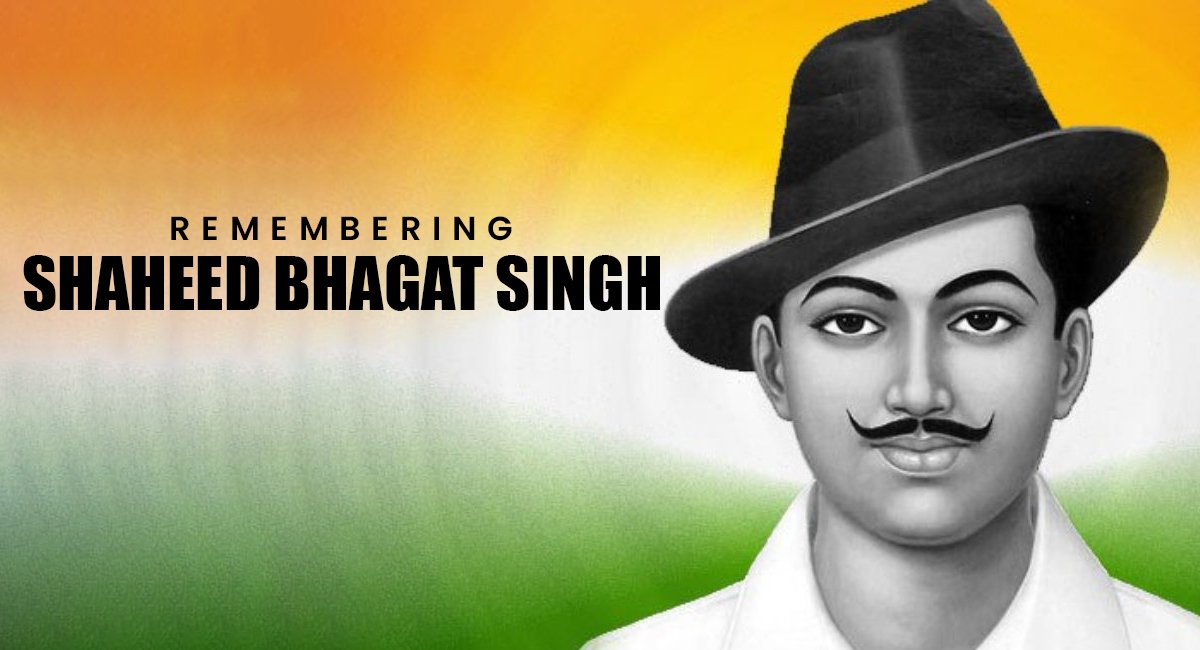
photographs and stories related to his freedom struggles. His iconic image
wearing a hat young Bhagat Singh is most recognizable images of India’s freedom
struggle.
A Legacy
that Lives on
Bhagat
Singh lived a short life but his impact reached generations. His writings,
revolutionary activities and his sacrifice against the British rule gave him a
permanent place in the Indian history. Whenever someone talks about India’s
freedom, the name Bhagat Singh is discussed with respect. His birth anniversary
reminds us to remember his ideas, reading, political awareness and his thing
towards the society.

Discussion & Comments (0)
No comments yet. Be the first to share your thoughts on this story!
Leave a Comment