

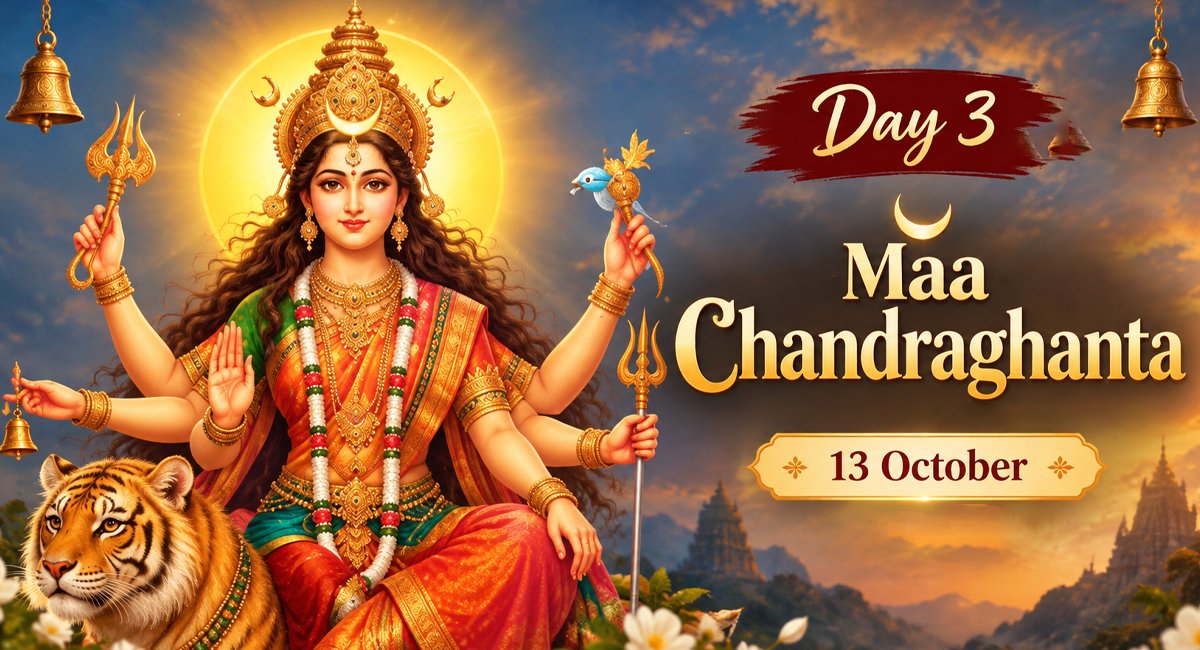
Navratri is one of the most important Hindu festivals in India. This nine - day festival is dedicated to the nine forms of Maa Durga and each form represents a different quality of divine power. On the third day of sharad Navratri , devotees worship Maa Chandraghanta , the third form of Maa Durga. Maa Chandraghanta is worshipped on the third day of Navratri. She is considered a symbol of courage, strength, peace, and protection. Devotees worship her to seek blessings for happiness, confidence, and protection from negative energies.
Maa Chandraghanta’s divine form teaches us that staying peaceful in life is important, but being strong and fearless enough to face difficult situations is equally important.
Who Is Maa Chandraghanta?
Maa Chandraghanta is the third
form of Maa Durga among the nine forms of Navdurga. She has a crescent moon
shaped like a bell on her forehead, which is why she is known as Chandraghanta.
The word “Chandra” means moon, while “Ghanta”
means bell. According to Hindu beliefs, Maa Chandraghanta is a powerful form of
Goddess Parvati. Her divine form represents courage, bravery, and strength. Maa
Chandraghanta is worshipped as a Goddess who protects her devotees and fights
against evil forces. Devotees worship her to seek blessings for spiritual
strength, peace of mind, and confidence.
Maa Chandraghanta’s Appearance and Its
Significance
Maa Chandraghanta is generally
depicted with ten arms, a crescent moon on her forehead, and riding a lion or
tiger. Her hands hold different weapons and sacred objects.
Each feature of her appearance has a special
spiritual meaning.
1. Crescent Moon on Her Forehead: The crescent moon shaped like a bell on Maa’s forehead represents her identity. This is why she is known as Chandraghanta.
2. Ten Arms: Maa’s ten arms
represent her divine powers and her ability to fight against evil forces.
3. Lion or Tiger: Maa’s
mount symbolizes courage, bravery, and fearlessness. It teaches us to face
difficult situations instead of being afraid of them.
4. Weapons in Her Hands:
Maa’s weapons represent her power to destroy evil and fight against negative
forces.
5. Blessing Gesture: Maa is
also depicted making a gesture of blessing and protection for her devotees.
This represents her kindness and compassion.
Maa Chandraghanta’s divine form
teaches us that true strength is not just about being powerful, but also about
maintaining balance and inner peace during difficult situations.
What Is the Colour of Navratri Day 3?
Red is associated with Maa Chandraghanta and
represents courage, strength, energy, and passion. Devotees may wear red
clothes while worshipping Maa Chandraghanta on the third day of Navratri. The
colour reflects the Goddess's powerful and fearless nature and symbolizes
devotion and positivity.
The Story of Maa Chandraghanta
According to Hindu religious
traditions, the story of Maa Chandraghanta is associated with Goddess Parvati.
Goddess Parvati performed intense
penance to marry Lord Shiva. Pleased with her devotion and dedication, Lord
Shiva eventually married her. After her marriage, Goddess Parvati took a divine
and powerful form known as Maa Chandraghanta. A crescent moon shaped like a
bell appeared on her forehead, which is why she came to be known as Chandraghanta.
This form of Maa Chandraghanta represents her bravery, strength, and power to
protect the world from evil forces According to religious beliefs, the sound of
Maa Chandraghanta’s bell has the power to drive away evil forces and destroy
negativity. Her powerful appearance inspires devotees to become fearless and confident.
The story of Maa Chandraghanta teaches us that we can face difficult situations
in life with devotion, courage, and determination.
Maa
Chandraghanta Mantra
On the third day of Navratri,
devotees chant Maa Chandraghanta’s mantra while worshipping her.
Mantra:
ॐ देवी चन्द्रघण्टायै नमः॥
Om Devi
Chandraghantayai Namah.
Meaning of
the Mantra:
This mantra means that we bow to Goddess
Chandraghanta and pray for her divine blessings, strength, and protection.
Devotees chant this mantra with faith and devotion. According to religious
beliefs, mantra chanting can help develop spiritual focus and inner peace.
Conclusion: The Significance of Maa Chandraghanta
Maa Chandraghanta is the third
form of Maa Durga, worshipped on the third day of Navratri. She is considered a
symbol of courage, strength, peace, and divine protection. The crescent moon on
her forehead, her ten arms, and her form riding a lion or tiger represent her
divine power. Devotees worship her to seek blessings for confidence, peace of
mind, and happiness. Navratri Day 3 reminds us to follow Maa Chandraghanta’s
teachings in our daily lives. We should face difficult situations with courage
and maintain patience, faith, and positivity in every situation. Through the
worship of Maa Chandraghanta, devotees strengthen their spiritual connection
and learn to value courage, discipline, and peace in life.
Discussion & Comments (0)
No comments yet. Be the first to share your thoughts on this story!
Leave a Comment